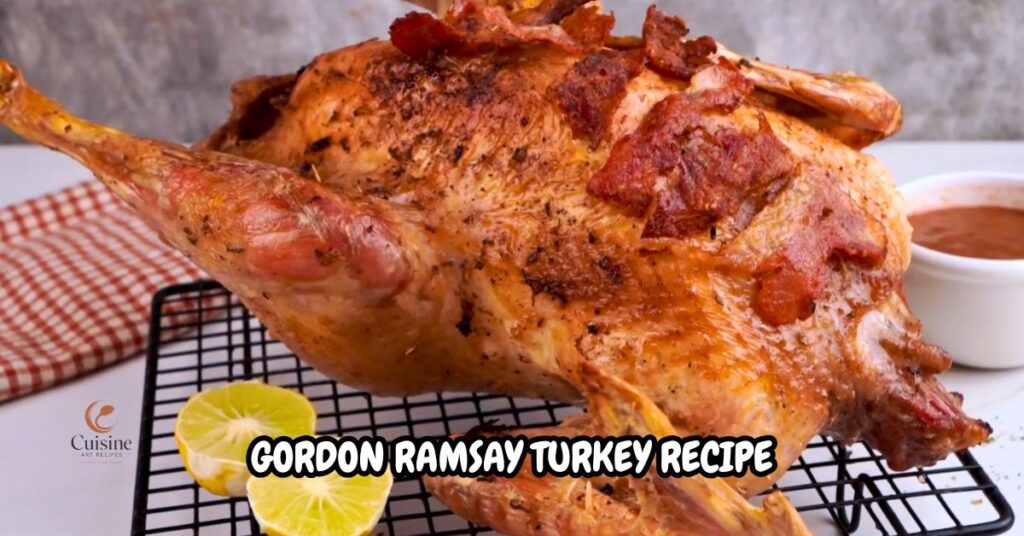
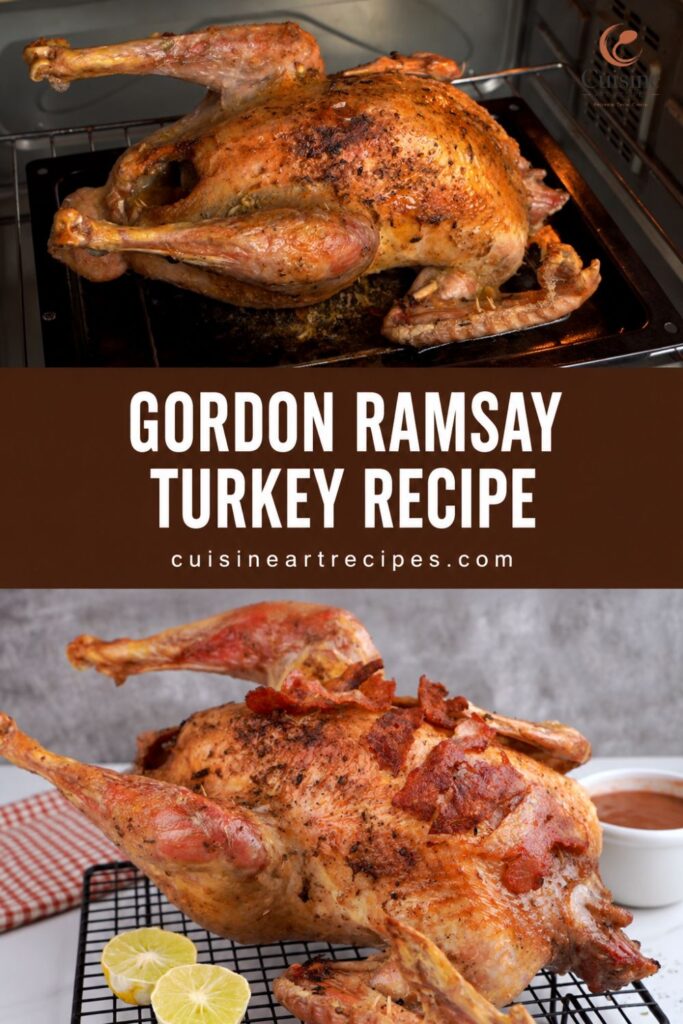
Why does turkey turn perfectly normal people into nervous wrecks every December? I get it though. One bird sits at the center of the whole table, and everyone is watching to see how it turns out.
I used to dread cooking turkey too. The first time I tried Gordon Ramsay’s Recipe, I was skeptical of all the fuss with butter tucked under the skin. It felt like more work than my usual method, and I almost gave up halfway through prepping it.
Then I finished cooking that bird, and I understood why so many home cooks trust his approach. Nothing about it turned out complicated once I went through it stage by stage. The technique mostly asks for a little patience, not any special skill.
That’s really what makes this recipe worth trying. You don’t need years of professional training to pull it off, just some basic prep the day before and a clear plan for the oven. I’ve made this Gordon Ramsay Turkey Recipe enough times now that I trust it completely, even for a big holiday crowd.
How to Keep Turkey Moist and Juicy
People ask me one thing every year. They want to know how to stop the turkey from drying out. That question shows up in almost every search about roasting a whole bird.
Turkey breast has almost no fat, so it dries out fast in a hot oven. This recipe solves that with citrus herb butter pushed under the skin before roasting even starts.
Smoked bacon goes over the breast for the last stretch of cooking. It bastes the meat as it renders, and it keeps the skin from burning too fast.
The last fix is patience. Let the bird rest for a long stretch after roasting. The juices settle back into the meat instead of leaking onto the cutting board.
Why You Should Cook Stuffing Separately
Some cooks swear by packing wet bread stuffing right into the cavity. That method carries real risk. The stuffing sits at unsafe temperatures while the bird cooks. It can hold onto bacteria longer than the meat around it.
This recipe keeps the cavity for aromatics only: halved onions, lemon, and bay leaves. They steam the meat gently from the inside, with none of the food safety worry that comes with wet stuffing.
Any bread stuffing gets baked separately in its own dish, with a buttery, crisp top from direct oven heat. The turkey also cooks more evenly without the extra mass inside it.
Gordon Ramsay Turkey Recipe Ingredients
5-kilogram (about 11-pound) whole turkey: This is the base of the whole dish, and its size feeds eight people with leftovers left over. I buy mine fresh from a local butcher rather than a frozen grocery store bird, since a fresh bird roasts more evenly.
250 grams (about 1 cup) unsalted butter, softened: This forms the base of the herb butter that goes under the skin. I always reach for Kerrygold, since its higher fat content makes the butter easier to spread cold.
1 teaspoon salt and a scant teaspoon black pepper: These season the butter and the cavity. Under-seasoning is the most common mistake here, since a large bird needs more salt than most people expect.
2 tablespoons olive oil: A splash goes into the herb butter to keep it from burning in the hot oven. Another drizzle goes over the skin before roasting, helping it crisp instead of steaming.
Zest and juice of 2 lemons: The zest goes into the butter for a citrus edge, and the juice brightens the gravy later. I use a microplane for the zest so I skip the bitter white pith.
3 cloves garlic, pureed: Pureed garlic melts into the butter instead of leaving sharp raw chunks under the skin. Turkey is a mild, delicate meat, so whole minced cloves easily overpower it.
½ cup fresh parsley, chopped: this adds a grassy note to the butter and cuts through the richness. Flat-leaf parsley works better than curly, since it chops finer.
Without parsley on hand, chopped chives work as a swap, though you’ll lose some of the grassy edge.
2 onions, halved: These go inside the cavity, where they steam as the bird roasts and add sweetness to the pan drippings. Later they get chopped again for the gravy base.
2 bay leaves: Tucked into the cavity alongside the onions, they give the steam inside the bird a bittersweet, slightly spicy edge. Dried bay leaves work just as well as fresh.
8 to 10 rashers smoked streaky bacon: Draped over the breast, this renders slowly and bastes the meat as it roasts. I use Oscar Mayer smoked bacon, mostly because my grocery store always has it stocked.
It also builds a smoky base for the gravy once it’s chopped and fried later in the roasting tray.
2 sprigs fresh rosemary: Fried into the gravy base, rosemary adds an aromatic, almost pine-like punch that plain stock lacks. A teaspoon of dried rosemary works in place of fresh, though it turns out milder.
3 tomatoes, chopped: These thicken the gravy naturally as they break down, adding a fresh, slightly acidic edge that balances the richness of the butter and bacon.
1 cup dry hard cider: This deglazes the roasting tray and adds a subtle apple note that plays off the citrus in the butter. I reach for Angry Orchard’s dry cider, since it isn’t too sweet.
2 cups chicken stock: This stretches the gravy and rounds it out once the cider reduces. I keep a carton of Swanson stock in the pantry for exactly this reason.
A small handful of crushed walnuts: These go into the bottom of the gravy boat before the hot gravy is ladled in, adding a toasty crunch against the smooth liquid.
Kitchen Equipment You’ll Need
- Large roasting pan with a rack: holds the bird evenly.
- Meat thermometer: confirms safe internal temperature.
- Kitchen string: ties the legs together.
- Basting brush or spoon: for regular basting.
- Fine mesh sieve: strains the gravy smooth.
- Potato masher: crushes gravy vegetables for flavor.
- Aluminum foil: tents the bird while resting.
- Sharp carving knife: slices the rested turkey.
How to Make Gordon Ramsay Turkey Recipe
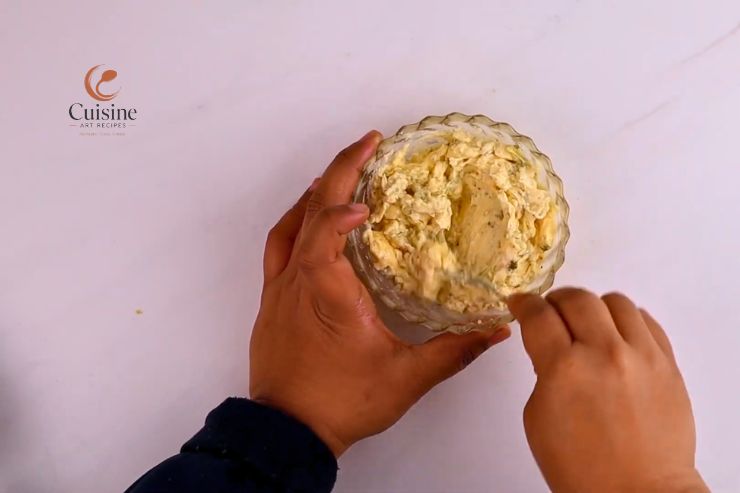
1. Make the Herb Butter: Mix softened butter with salt, pepper, and a tablespoon of olive oil. Add the lemon zest and juice, pureed garlic, and chopped parsley. Mix until fully combined and set aside.
2. Season and Fill the Cavity: Season inside the cavity with salt and pepper. Add the halved onions, lemon halves, and bay leaves. These steam the meat gently from the inside as the bird roasts.
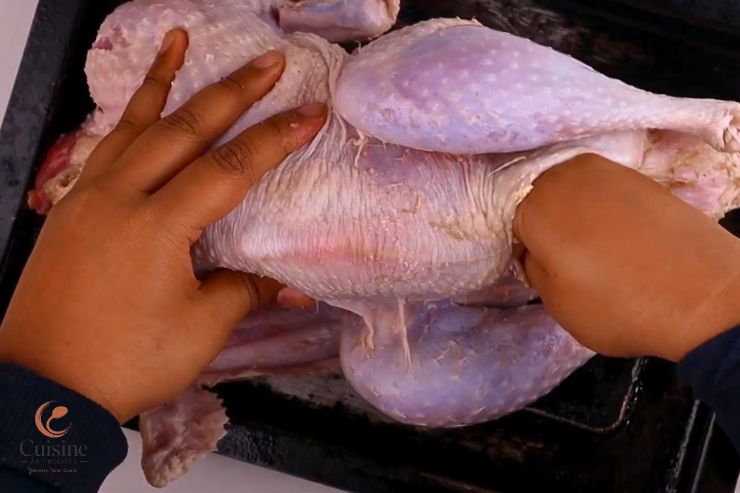
3. Loosen the Skin: Work your fingers gently under the skin over the breast and thighs, keeping it intact. The first time I tried this, I tore the skin near one thigh, and butter leaked out during roasting. Go slowly and stop the moment you feel resistance. A small tear is fixable, a large one lets all your butter escape.
4. Butter the Bird: Push the herb butter under the loosened skin, spreading it evenly over the breast and thighs. Massage any leftover butter over the outside skin, legs, and wings.
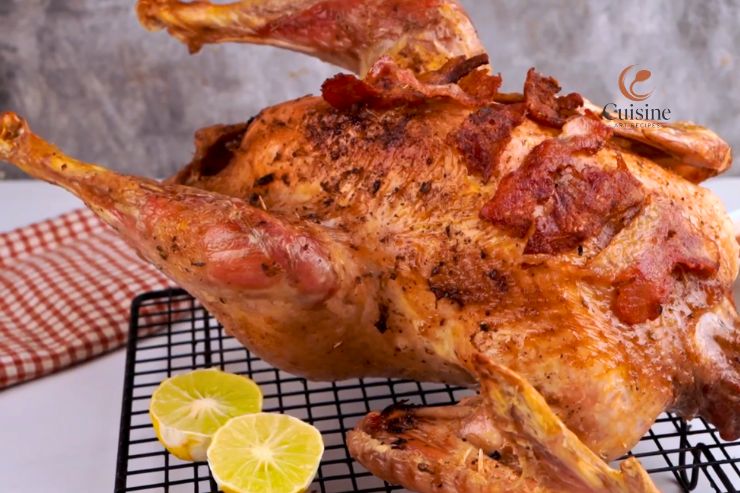
5. Start at High Heat: Roast at 220°C (425°F) for 10 minutes to brown the skin fast. Baste, then lay the bacon rashers over the breast. The skin should already look golden and slightly blistered at this point.
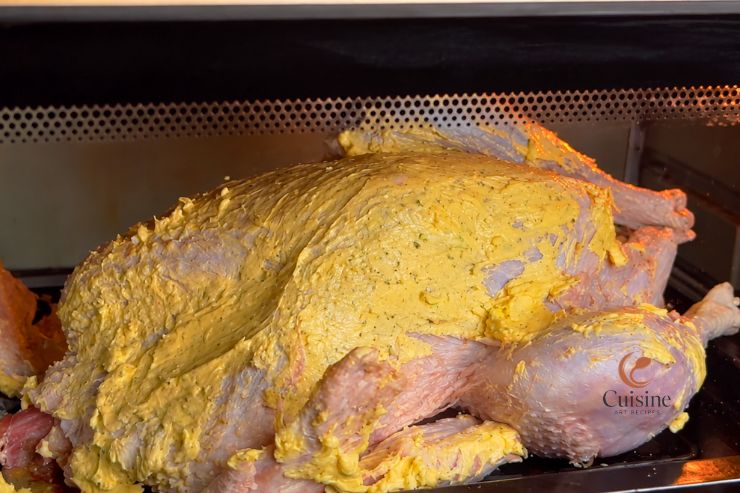
6. Roast Low and Slow: Turn the oven down to 180°C (350°F). Roast for about 30 minutes per kilogram, basting every 30 to 40 minutes. A 5-kilogram bird takes roughly two and a half hours.
7. Check for Doneness: Insert a knife into the thickest part of the thigh. Clear juices mean it’s done. Pink juices mean it needs another 15 minutes.
8. Rest the Turkey: Tent it loosely with foil and let it rest for as long as it roasted, up to two and a half hours. That long rest pulls the juices back into the meat.
9. Build the Gravy: Drain the fat from the roasting tray, then set the tray over medium heat. Add the chopped bacon, roasted onions, and roasted lemon, and fry briefly with the rosemary and tomatoes.
10. Reduce and Strain: Pour in the cider and reduce by half, then add the resting juices and chicken stock. Mash the vegetables into the liquid, then strain through a sieve.
Chef Special Tips for This Turkey
1. Skin Splits While Loosening It: Stop pulling and switch to the other side. Small tears are fine, since the butter still seeps through as it melts.
2. Gravy Tastes Thin: Simmer it uncovered for another 10 minutes to reduce, or mash more roasted vegetables into the liquid before straining.
3. Skin Browns Too Fast: Tent that section loosely with foil and lower the oven by 10 degrees for the rest of the cook.
4. Butter Melts Out Before Roasting: Chill the bird uncovered in the fridge for 30 minutes so the butter firms back up under the skin.
5. Bacon Slides Off the Breast: Tuck the ends under the twine or a couple of toothpicks so it stays put through basting.
6. Bottom of the Bird Looks Pale: Spoon hot fat from the tray over the thighs halfway through roasting.
Easy Ways to Customize This Turkey Recipe
Truffle Butter Version: A tablespoon of chopped black truffle goes into the herb butter for special occasions. It gives the meat an earthy, mushroom-like depth.
Citrus Breadcrumb Topping: Orange and lemon zest breadcrumbs get pressed over the breast in the last 20 minutes of roasting. This adds a crisp, golden crust on top of the butter.
Spiced Roast Potato Pairing: The roasted potatoes get tossed with a teaspoon of chili flakes and turmeric instead of plain salt. That turns them a deep golden color with a faint kick of heat.
Chestnut and Wild Rice Stuffing: Cooked chestnuts fold into a separate stuffing dish along with wild rice, instead of plain bread. That adds a chewy, nutty texture next to the turkey.
Maple Butter Swap: A tablespoon of maple syrup stirs into the herb butter for a sweeter, caramelized skin. This one works well for a smaller Thanksgiving turkey.
What to Serve With Gordon Ramsay Turkey
This turkey works well next to the spiced roast potatoes from the variations above, since the chili and turmeric cut through the richness of the butter.
Roasted Brussels sprouts with bacon bits pick up on the smoky flavor already in the gravy. A simple green salad with a sharp vinaigrette balances out all that butter too.
Tart cranberry sauce adds acidity, which cuts through the richness of the butter and bacon better than anything sweet does.
For a full spread, I set out the turkey, spiced potatoes, and Brussels sprouts, with gravy and cranberry sauce on the side. That combination covers rich, sharp, and warm all in one sitting.
How I Store This Turkey
Cooked turkey keeps well in the fridge for up to 4 days when stored properly. I pack the meat into a shallow airtight container instead of one deep pile, since that helps it cool faster.
Keep the gravy in a separate sealed jar. It thickens as it chills, so a small splash of chicken stock loosens it back up on the stove.
For reheating, I cover sliced turkey with foil and warm it at 150°C for about 15 minutes, adding a splash of stock so the meat doesn’t dry out further.
For longer storage, sliced turkey freezes well for up to 3 months in a sealed freezer bag with the air pressed out. Thaw it overnight in the fridge before reheating.
Creative Ways to Use Leftover Turkey
Leftover turkey works best repurposed within 3 to 4 days of the original roast, while the meat is still moist enough to shred easily.
Shred it into a turkey pot pie, using the leftover gravy as the sauce base and topping it with a sheet of puff pastry.
Or turn it into turkey and rice soup, using the carcass for a quick stock and adding shredded meat back in near the end.
Gordon Ramsay Turkey Recipe FAQs
1. Can You Brine the Turkey Before Roasting?
Yes, a simple saltwater brine works fine here. Pat the skin fully dry afterward, or the butter won’t stick as well under loosened skin.
2. Do You Need a Meat Thermometer?
Not strictly, since the knife and clear-juices test works fine. A thermometer is more precise though, and the thigh should read 165°F (74°C).
3. Can You Make the Herb Butter Ahead?
Yes, mix it up to 2 days ahead and keep it covered in the fridge. Let it soften at room temperature before spreading it under the skin.
4. What Size Turkey Does This Recipe Serve?
It’s built around a 5-kilogram (11-pound) bird that feeds eight people. Scale the butter and roasting time up or down for a bigger or smaller turkey.
5. Can You Skip the Bacon?
Yes, though the skin may brown less evenly without it. Baste more often instead, roughly every 25 minutes, to make up the difference.
6. Is This Turkey Recipe Spicy?
No, the base recipe carries no heat at all. The chili flake roast potatoes from the variations add a mild kick for those who want one.
7. Can You Prepare the Turkey the Night Before?
Yes, butter it fully, cover it with foil, and refrigerate overnight. Pull it out and let it sit for 30 minutes before it goes in the oven.
8. Why Is My Turkey Gravy Greasy?
You likely skipped draining the excess fat from the roasting tray first. Spoon off the fat layer before adding the bacon and onions.
9. Can You Use Boneless Turkey Breast?
Yes, cut the roasting time to roughly 20 minutes per pound at 180°C. Skip the cavity-filling step entirely, since there’s no cavity to fill.
10. How Do You Know When Turkey Is Overcooked?
Overcooked breast meat feels dry and stringy when pulled apart. Pull the bird as soon as the thigh hits 165°F, even when the breast reads slightly higher.
Gordon Ramsay Turkey Recipe
Gordon Ramsay Turkey Recipe with citrus herb butter, smoky bacon, and rich pan-dripping gravy for a juicy, golden holiday turkey.
Ingredients
- 5 kg (11 lb) whole turkey
- 250 g (1 cup) unsalted butter, softened
- 1 teaspoon salt
- Scant 1 teaspoon black pepper
- 2 tablespoons olive oil
- Zest and juice of 2 lemons
- 3 cloves garlic, pureed
- ½ cup fresh parsley, chopped
- 2 onions, halved
- 2 bay leaves
- 8–10 rashers smoked streaky bacon
- 2 sprigs fresh rosemary
- 3 tomatoes, chopped
- 1 cup dry hard cider
- 2 cups chicken stock
- 2 tablespoons crushed walnuts
Instructions
- Mix softened butter with salt, pepper, and a tablespoon of olive oil. Add the lemon zest and juice, pureed garlic, and chopped parsley. Mix until fully combined and set aside.
- Season inside the cavity with salt and pepper. Add the halved onions, lemon halves, and bay leaves. These steam the meat gently from the inside as the bird roasts.
- Work your fingers gently under the skin over the breast and thighs, keeping it intact. The first time I tried this, I tore the skin near one thigh, and butter leaked out during roasting. Go slowly and stop the moment you feel resistance. A small tear is fixable, a large one lets all your butter escape.
- Push the herb butter under the loosened skin, spreading it evenly over the breast and thighs. Massage any leftover butter over the outside skin, legs, and wings.
- Roast at 220°C (425°F) for 10 minutes to brown the skin fast. Baste, then lay the bacon rashers over the breast. The skin should already look golden and slightly blistered at this point.
- Turn the oven down to 180°C (350°F). Roast for about 30 minutes per kilogram, basting every 30 to 40 minutes. A 5-kilogram bird takes roughly two and a half hours.
- Insert a knife into the thickest part of the thigh. Clear juices mean it’s done. Pink juices mean it needs another 15 minutes.
- Tent it loosely with foil and let it rest for as long as it roasted, up to two and a half hours. That long rest pulls the juices back into the meat.
- Drain the fat from the roasting tray, then set the tray over medium heat. Add the chopped bacon, roasted onions, and roasted lemon, and fry briefly with the rosemary and tomatoes.
- Pour in the cider and reduce by half, then add the resting juices and chicken stock. Mash the vegetables into the liquid, then strain through a sieve.
Nutrition Information:
Yield: 8 Serving Size: 1Amount Per Serving: Calories: 540
That two and a half hour rest sounds excessive until you carve into meat that stays juicy all the way to the wing tip. The citrus butter under the skin does more work than any basting alone could manage.
This turkey has earned a permanent spot on my December table, chili roast potatoes and all. Once you taste gravy built from real pan drippings, plain stock gravy never quite measures up again.