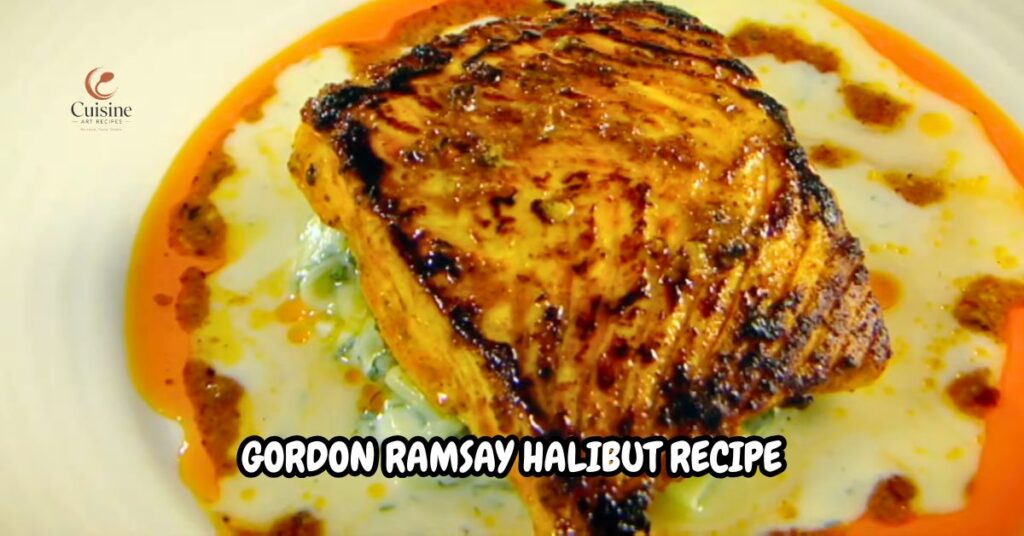
A neighbor left two thick halibut fillets on my porch on a rainy Tuesday in April. That night I searched for a Gordon Ramsay Halibut Recipe on my phone, still in wet socks. I had cooked fish at home for years, but never halibut.
Most halibut recipes go wrong in the same spots. Cooks bake the fish until it turns dry. They skip the chill time. Others trust a jar of paste and stop there.
This one comes from a Gordon Ramsay cooking video. His Chelsea flagship, Restaurant Gordon Ramsay, has held three Michelin stars since 2001. That kitchen does not forgive dry fish.

How to Cook Halibut Without Drying It Out
Halibut is lean. It has very little fat to protect it, so one extra minute turns moist flesh chalky. That worry shows up in nearly every question I see about this fish.
People who type Gordon Ramsay Halibut Recipe into a search bar usually want two answers. How long to cook it, and how to keep it from drying out. Price comes up too, since thick cuts cost more than most fish.
Thickness and a coating solve both. Fillets about 1¼ inches thick need 3 to 3½ minutes per side. The yogurt coat clings to the surface and slows moisture loss in the pan.
You also do not need a tandoor. A 12-inch skillet on my gas stove did the job, and a coil electric burner worked at my sister’s place.
Ingredients for Gordon Ramsay Halibut
4 skinless halibut fillets (6 ounces each): Thick, lean fillets about 1¼ inches high stay moist through a short sear. The Whole Foods fish counter cuts mine from the center of the fish. Ask for matching pieces so they cook evenly. Thick cod loins work in place of halibut. Expect softer flakes and cut 30 seconds from each side.
1½ teaspoons cumin seeds: Whole seeds release fresh oils under the pestle, which jarred ground cumin has already lost. Frontier Co-op is the brand I reach for. Keep the jar away from the stove. Pre-ground works for both seeds. Use 1 1/4 teaspoons of each and expect a softer aroma.
1½ teaspoons coriander seeds: These bring a citrusy, floral note that balances the cumin’s earthiness. Badia is my brand. Pound the two together so they blend evenly.
1 scant teaspoon kosher salt, plus ¼ teaspoon for the raita: Coarse salt grinds the seeds into sand inside the mortar. I use Diamond Crystal. Morton is denser, so cut each amount by about a third.
1 knob fresh ginger (about 1 inch): Ginger brings a sharp, peppery heat that dried powder cannot match. Choose firm pieces with tight skin. Trader Joe’s organic ginger is what I grab.
3 garlic cloves: Garlic adds pungency that softens once the marinade meets the hot pan. Christopher Ranch heads have plump cloves. Toss any clove with a green sprout, which turns bitter.
1½ teaspoons sweet paprika: Paprika builds the orange-red base color without adding much heat. Penzeys has a deeper red than most supermarket tins. Buy small jars, since paprika fades within a year.
1 teaspoon Kashmiri chili powder: This colors the paste red while staying mild. Swad is the brand in my cabinet. Cayenne can swap in at a scant 1/4 teaspoon. It runs hotter and looks paler.
½ teaspoon ground turmeric: Turmeric shifts the red toward orange and adds an earthy edge. Simply Organic is my pick. It stained my wooden board yellow for a week, so wipe spills fast.
1 teaspoon garam masala: This warm blend rounds out the cumin and coriander. MDH is the tin I keep. Replace it once it passes a year, when the smell turns dusty.
1 tablespoon tomato paste: Ramsay says tomato puree. In the US, thick paste adds the body that helps the marinade cling. Amore comes in a tube that lasts weeks in the fridge.
3 tablespoons fresh lemon juice, divided: Two tablespoons go in the paste and one in the raita. Acid brightens the spices and lightly firms the fish surface. One Sunkist lemon gives about 3 tablespoons.
4 tablespoons groundnut oil, divided: Half carries the spices in the paste. The rest coats the pan for searing. Planters peanut oil handles medium heat without smoking. Avocado oil works well for anyone avoiding peanuts.
½ cup whole-milk Greek yogurt (120 g): Yogurt binds the paste and keeps the spices in place on the fillet. Fage Total 5% stays thick in the bowl. Low-fat versions run thin and scorch sooner.
1 scant teaspoon sugar: Sugar softens the chili’s bite and helps the crust brown through caramelization. Domino granulated works fine.
1 large English cucumber: Peeled ribbons keep a crisp bite under yogurt. Costco sells a three-pack that lasts the week. Stop peeling at the seed core, since seeds release extra water.
¾ cup Greek yogurt (180 g): This cool base calms the chili heat. Any thick, full-fat brand works, and I whisk it smooth first so the ribbons coat evenly.
¼ cup chopped fresh mint: Mint adds a cooling, menthol lift that the paste needs. Wegmans sells a big clamshell. Chop it right before mixing, because cut leaves darken quickly.
Essential Kitchen Equipment
- Mortar and pestle: pounds seeds and salt
- 12-inch skillet: nonstick or cast iron
- Fish spatula: slides under delicate fillets
- Vegetable peeler: cuts long ribbons
- Instant-read thermometer: checks 135°F center
- Two mixing bowls: marinade and raita
How to Cook Gordon Ramsay Halibut
1. Chill the Fish: Pat the fillets dry with paper towels. Set them on a plate, cover loosely, and chill for 20 minutes. Cold flesh holds its shape when you spoon on the marinade. The fillets should feel cold and slightly springy when pressed.
2. Pound the Seeds: Add the cumin and coriander seeds to a mortar with the salt. Pound for about 2 minutes, until the pieces look like coarse sand. My grandmother’s granite mortar handled it well. A spice grinder works in short bursts. Stop when no whole seeds remain. The pile should smell warm and citrusy.
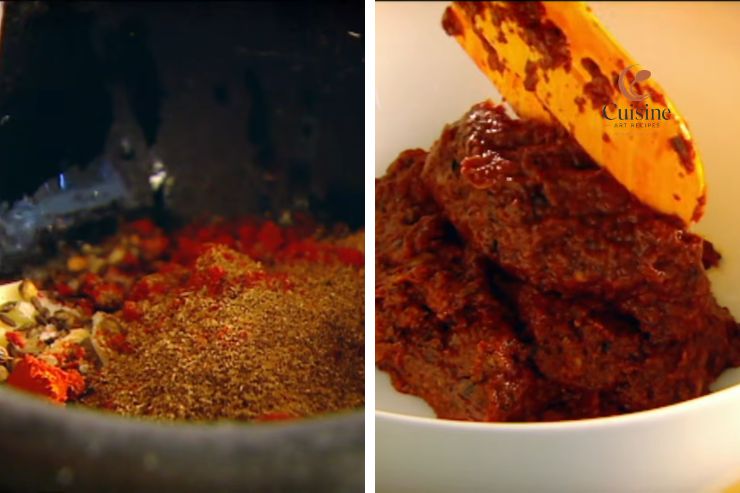
3. Build the Paste: Add the ginger and garlic to the mortar and pound to a rough mash. Stir in the paprika and chili powder, then the turmeric and garam masala. Add the tomato paste and 2 tablespoons each of lemon juice and oil. The paste should look deep orange-red and hold a ribbon when the spoon lifts.
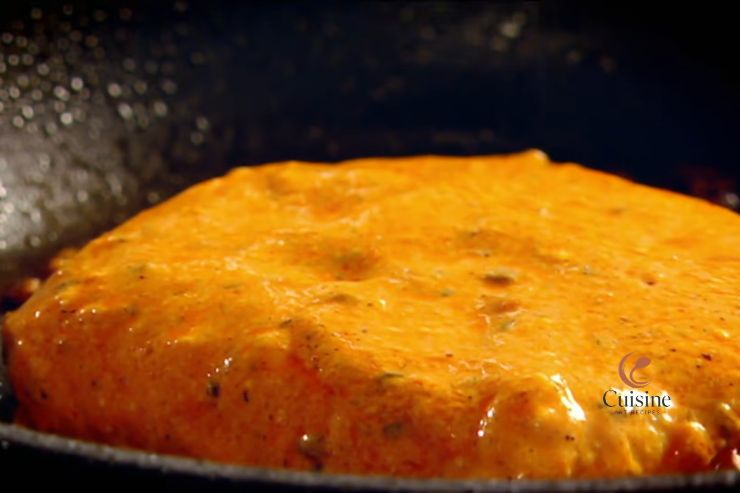
4. Marinate the Halibut: Whisk the ½ cup yogurt and the sugar into the paste. Spoon it over the fillets and turn to coat. Cover and refrigerate for 30 to 45 minutes. My first batch sat overnight and turned chalky, since the lemon firmed the surface. Should that happen, scrape off most of the marinade and cut 30 seconds from each side.
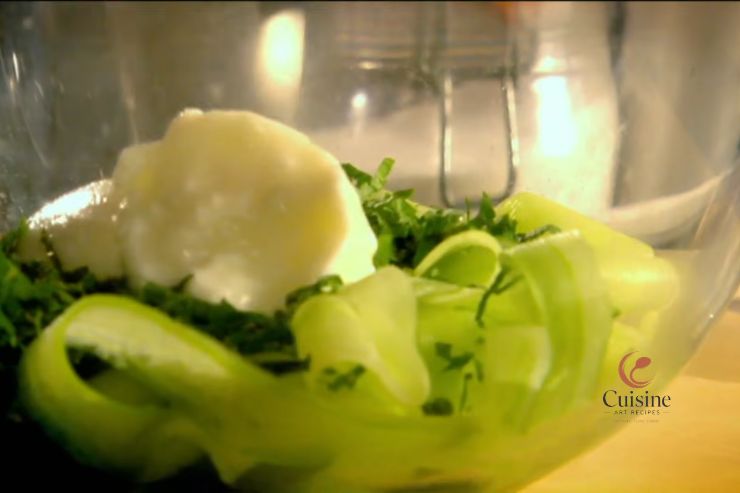
5. Shape the Raita: Peel the cucumber into long ribbons, stopping at the seeds. Blot the ribbons on paper towels for 5 minutes. Whisk the ¾ cup yogurt, mint, and 1 tablespoon lemon juice until smooth. Fold in the ribbons and ¼ teaspoon salt just before plating. Watery raita means the salt went in too early. Blot the ribbons again and stir in a spoonful of fresh yogurt.
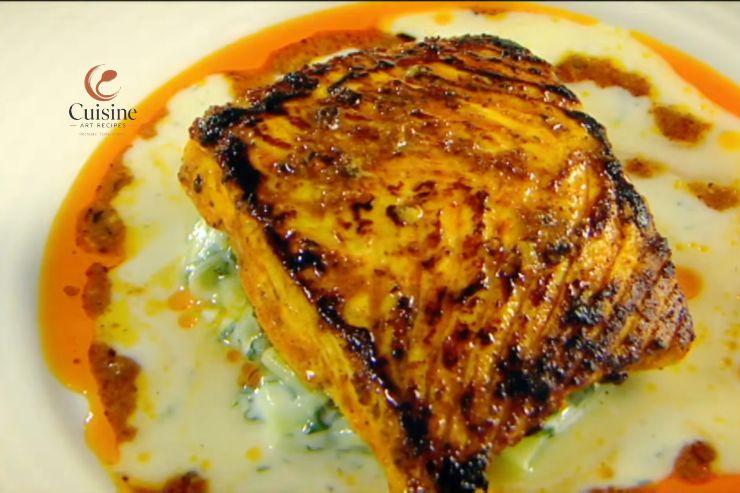
6. Sear the Halibut: Heat 2 tablespoons of oil in a 12-inch skillet over medium heat for 2 minutes. Lay in the fillets with a little space between each. Cook 3½ minutes, flip, and cook 3 minutes more. The center should read 135°F, while the USDA lists 145°F. The underside should turn deep orange with dark flecks, and the fillet should release with a nudge.
7. Rest the Fillets: Move the fish to a warm plate and rest it for 2 minutes. Carryover heat lifts the center by a few degrees. Use the wait to wipe the pan and set out the plates. The flesh should turn opaque and split into large flakes under a fork.
8. Plate and Serve: Spoon a mound of raita onto each plate and set a fillet on top. Serve right away, while the fish is hot and the raita is cold.
Alternative Ways to Cook Gordon Ramsay Halibut
Baking suits a hands-off cook: 425°F on a parchment-lined sheet pan. Brush the fillets with 1 tablespoon of oil instead of oiling a pan. Allow 12 to 15 minutes, until the center reads 135°F. The crust stays paler without direct contact with hot metal.
The grill suits summer nights. Heat it to medium-high, around 450°F, and oil the grates well. Use a fish basket or a foil sheet, since the yogurt coat can stick. Plan on 4 to 5 minutes per side, then check for 135°F.
Expert Tips for Perfectly Cooked Halibut
1. Fillet Tears at the Flip: The crust has not set yet. Wait another 30 seconds, then slide the fish spatula under.
2. Marinade Steams, Not Browns: Thick clumps of paste trap moisture. Scrape them off, leaving a thin, even coat.
3. Frozen Fillets Leak Water: Thaw overnight in the fridge on a rack, then pat dry. Pooled water in the pan blocks browning.
4. Center Dries Before the Crust Browns: Your fillets are thinner than 1 inch. Cut 30 seconds per side for each ¼ inch of lost thickness.
5. Raita Tastes Harsh: Mint stems are the usual cause. Pick leaves only, since stems taste grassy and bitter.
6. Burnt Spots on the Crust: The pan is too hot. Drop to medium-low for the second side and wipe the pan between batches.
How I Customize This Gordon Ramsay Halibut
Smoky Paprika: Use smoked paprika in place of the sweet, at the same 1½ teaspoons. The wood-smoke note suits late-summer dinners with grilled corn.
Coconut Yogurt: Swap in unsweetened coconut yogurt for both the marinade and the raita. The coat turns slightly sweeter and loses its tang, which works for a dairy-free guest.
Salmon Version: Use 1-inch salmon fillets and the same paste. The extra fat forgives an added minute in the pan, so this is my weeknight backup.
Fenugreek Finish: Crush 1 teaspoon of dried fenugreek leaves into the paste. It adds a faint, maple-like bitterness that suits a weekend spread of curries.
Charred Lemon: Halve a lemon and sear it cut side down in the pan for 2 minutes. The browned juice tastes sweeter and less sharp, so I squeeze it over the plate.
Pomegranate Raita: Scatter 2 tablespoons of pomegranate seeds over the raita. They add juicy tartness and a light crunch, so I use them at holiday tables.
What I Serve With Gordon Ramsay Halibut
Cumin rice is my first pick. Basmati toasted in butter with 1 teaspoon of cumin seeds soaks up the paste that slides off the fish. Stir in a handful of frozen peas for the last 2 minutes.
Warm naan comes next. Stonefire garlic naan, heated 30 seconds per side in a dry skillet, scoops up the raita. A chickpea salad with red onion and lemon adds a firm bite that the soft fish lacks.
For a refreshing drink, chilled papaya juice pairs beautifully with the spiced fish. Its natural sweetness helps balance the chili and warm spices in the marinade. Mango lassi is another great option if you want something creamy and cooling.
On a hot July evening, I cooked the rice while the fish marinated. Then I seared the halibut and warmed the naan in the same pan. My dad ate two fillets and asked for more raita.
How to Store Leftover Halibut and Raita
Cooked halibut keeps for 2 days in the fridge. Use a shallow glass container with a tight lid. Lay the fillets in a single layer so the crust stays intact. Label the lid with the date.
Store the raita separately, also for 2 days. Cucumber keeps releasing water as it sits. Pour off the liquid and stir in a spoonful of fresh yogurt before serving. A jar with a snug lid limits fridge smells.
Reheat the fish in a 275°F oven for 10 to 12 minutes, loosely covered with foil. Add a splash of water to the foil packet to keep steam in. The microwave overcooks lean halibut in seconds.
The spice paste alone, before the yogurt goes in, freezes for up to 3 months. Spoon it into an ice cube tray, then bag the cubes. Cooked fillets do not freeze well, since the flakes lose moisture as they thaw.
Creative Ways to Use Leftover
Leftover halibut works best within 2 days of cooking. Toss any fish older than that. Flake the cold fish in large pieces, crust included, since the spiced coat seasons each bite.
For quick fish tacos, tuck the flakes into warm flour tortillas with shredded cabbage and a spoonful of leftover raita. The raita replaces a sauce, so the tacos come together in about 5 minutes. A squeeze of lemon cuts the richness of the yogurt.
For a naan wrap, spread raita on warm naan, add the fish and sliced red onion, and roll it tight. Warm the flakes in a dry skillet for 1 minute first.
FAQs
1. How Spicy Is the Tandoori Paste?
Mild to medium. Kashmiri chili powder gives color more than heat, and the yogurt softens what is left. For a bigger kick, whisk 1/4 teaspoon cayenne into the yogurt.
2. Should You Use Skin-On or Skinless Halibut?
Skinless. Halibut skin turns rubbery under a yogurt coat and blocks the paste from the flesh. Skin-on fillets also curl as the skin tightens. Ask the fishmonger to remove it, or grip the tail end with a towel and tug.
3. What Type of Halibut Should You Buy?
Look for Pacific halibut, often sold as Alaskan. Fresh fish is easiest to find from spring through fall. Check the Monterey Bay Aquarium Seafood Watch site for current ratings, since they differ by species and region.
4. Is This Tandoori Halibut Recipe Gluten-Free?
Yes, every ingredient is naturally gluten-free. Check the garam masala label, since some brands add fillers. Serve it with rice instead of naan for a fully gluten-free plate.
5. Can You Use the Tandoori Paste for Chicken?
Yes. Marinate boneless chicken thighs for 4 hours in the same yogurt paste. Pan-cook them 5 to 6 minutes per side, until the center reaches 165°F. Slice thick thighs open flat so they cook evenly.
6. Can You Use Grated Cucumber for Raita?
Grated cucumber sheds far more water than ribbons. Salt it in a colander for 10 minutes, then squeeze it hard in a clean towel. Expect a looser, softer texture on the plate.
7. How Can You Tell If Halibut Is Fresh?
Fresh halibut smells like clean seawater, with no sour or ammonia note. The flesh looks glossy and pearly white, and it springs back when pressed. Skip fillets with brown edges or a milky film.
8. Can You Add Cilantro to the Raita?
Yes. Replace half the mint with chopped cilantro, starting with 2 tablespoons. It adds a grassy, citrus edge. Stir it in at the last moment so the leaves stay green.
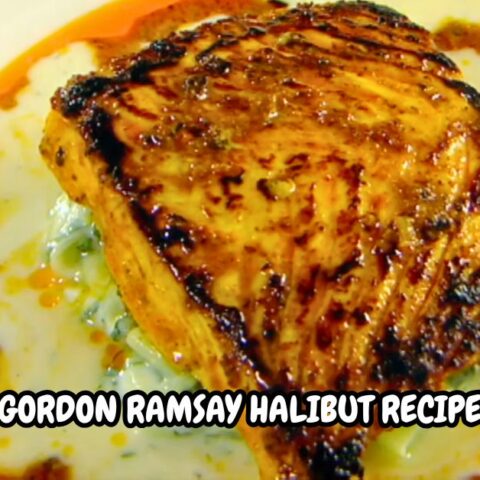
Gordon Ramsay Halibut Recipe
Gordon Ramsay Halibut Recipe using a fresh spice paste, not jarred, pan-seared and served on cool cucumber raita. Dinner in about 70 minutes.
Ingredients
- 4 skinless halibut fillets (6 ounces each)
- 1½ teaspoons cumin seeds
- 1½ teaspoons coriander seeds
- 1 scant teaspoon kosher salt, plus ¼ teaspoon for the raita
- 1-inch piece fresh ginger
- 3 garlic cloves
- 1½ teaspoons sweet paprika
- 1 teaspoon Kashmiri chili powder
- ½ teaspoon ground turmeric
- 1 teaspoon garam masala
- 1 tablespoon tomato paste
- 3 tablespoons fresh lemon juice, divided
- 4 tablespoons groundnut oil, divided
- ½ cup whole-milk Greek yogurt (120 g)
- 1 scant teaspoon sugar
- 1 large English cucumber
- ¾ cup Greek yogurt (180 g)
- ¼ cup chopped fresh mint
Instructions
- Pat the fillets dry with paper towels. Set them on a plate, cover loosely, and chill for 20 minutes. Cold flesh holds its shape when you spoon on the marinade. The fillets should feel cold and slightly springy when pressed.
- Add the cumin and coriander seeds to a mortar with the salt. Pound for about 2 minutes, until the pieces look like coarse sand. My grandmother's granite mortar handled it well. A spice grinder works in short bursts. Stop when no whole seeds remain. The pile should smell warm and citrusy.
- Add the ginger and garlic to the mortar and pound to a rough mash. Stir in the paprika and chili powder, then the turmeric and garam masala. Add the tomato paste and 2 tablespoons each of lemon juice and oil. The paste should look deep orange-red and hold a ribbon when the spoon lifts.
- Whisk the ½ cup yogurt and the sugar into the paste. Spoon it over the fillets and turn to coat. Cover and refrigerate for 30 to 45 minutes. My first batch sat overnight and turned chalky, since the lemon firmed the surface. Should that happen, scrape off most of the marinade and cut 30 seconds from each side.
- Peel the cucumber into long ribbons, stopping at the seeds. Blot the ribbons on paper towels for 5 minutes. Whisk the ¾ cup yogurt, mint, and 1 tablespoon lemon juice until smooth. Fold in the ribbons and ¼ teaspoon salt just before plating. Watery raita means the salt went in too early. Blot the ribbons again and stir in a spoonful of fresh yogurt.
- Heat 2 tablespoons of oil in a 12-inch skillet over medium heat for 2 minutes. Lay in the fillets with a little space between each. Cook 3½ minutes, flip, and cook 3 minutes more. The center should read 135°F, while the USDA lists 145°F. The underside should turn deep orange with dark flecks, and the fillet should release with a nudge.
- Move the fish to a warm plate and rest it for 2 minutes. Carryover heat lifts the center by a few degrees. Use the wait to wipe the pan and set out the plates. The flesh should turn opaque and split into large flakes under a fork.
- Spoon a mound of raita onto each plate and set a fillet on top. Serve right away, while the fish is hot and the raita is cold.
Notes
Marinate no longer than 45 minutes, since more time turns the surface chalky. Pull the fish at 135°F for moist flesh, or cook to the USDA figure of 145°F.
Nutrition Information:
Yield: 4 Serving Size: 1Amount Per Serving: Calories: 425
The paste is what stays with me about this tandoori halibut. Pounded seeds, fresh ginger and lemon give plain halibut a glowing orange crust and a citrus edge. Cold cucumber ribbons calm the chili on the plate.
Buy fillets near 1¼ inches thick, since thin cuts dry out first. Chill them, keep the marinade under 45 minutes, and pull the fish at 135°F. Those habits carry the whole dish.