
Gordon Ramsay French Onion Soup Recipe first showed up in my search history on a cold Sunday afternoon last winter, when I was hunting for something different to cook for dinner. I had made French onion soup plenty of times with different methods, but none of them had turned into a regular thing.
That afternoon, I bookmarked Ramsay’s version and set aside the following weekend to try it. The first round was mostly about learning the recipe and seeing how it fit my usual kitchen routine.
A few days later, I made it again for my mother-in-law, who dropped by unannounced and ended up staying for dinner. That visit is when I started paying closer attention to small details, like how long to let the onions go before adding the broth.
After several more rounds, this soup earned a steady spot in my recipe box. It comes out once the weather turns cold, and I think it deserves a spot in yours too.
What Is Gordon Ramsay French Onion Soup?
This Gordon Ramsay soup is his take on the classic French onion soup. It features onions cooked slowly until they are deeply caramelized, simmered in a rich beef broth, then topped with toasted bread and melted cheese.
Ramsay has released several versions of onion soup over the years. This recipe does not use alcohol and instead uses apple cider vinegar, making it safe for kids and those who avoid alcohol while still maintaining a savory flavor.
The main difference in this recipe is the method: a longer caramelization process, a stronger beef stock, and a milder cheese blend. Compared to a Michelin-style version, the key difference is the time spent on the onions rather than any special techniques.

Gordon Ramsay French Onion Soup vs. Other Versions
A classic French onion soup keeps things simple. Start with onions and beef stock and finish with a wedge of Gruyère. This adaptation of Ramsay’s version uses apple cider vinegar instead for the acidity without any alcohol.
Some cooks swap beef stock for chicken, landing on something lighter and less rich; this recipe stays with beef for a deeper base. English kitchens sometimes reach for Lincolnshire Poacher instead of Gruyère, for a sharper bite.
This bowl leans on a milder cheese blend for a gooier melt. A torn piece of sourdough works fine instead of a baguette, though it soaks up broth faster. Next to what most restaurants serve, a homemade batch lets you control the salt and how dark the onions get.
Gordon Ramsay French Onion Soup Ingredients
3 pounds yellow onions (about 6 large), thinly sliced: The backbone of the pot, cooked down until they nearly melt. Vidalia onions caramelize a shade faster in season.
4 tablespoons unsalted butter: Carries most of the caramelization flavor and browns the onions instead of steaming them. I keep Kerrygold on hand for its deeper color.
2 tablespoons olive oil: Raises the butter’s smoke point, keeping it from scorching over the 40-some minutes onions spend in the pot.
1 tablespoon fresh thyme leaves: Adds an earthy note that cuts the sweetness from caramelization. Dried thyme, a scant teaspoon, works in a pinch.
2 tablespoons apple cider vinegar: Deglaze the pot and lift the browned bits stuck to the bottom, giving the broth brightness.
6 ½ cups beef broth: Makes up the bulk of the liquid, so a richer, more concentrated broth changes the whole pot. Better Than Bouillon is my go-to.
1 teaspoon kosher salt, plus ½ teaspoon cracked black pepper: Pulls moisture from the onions early, then seasons the broth again near the end.
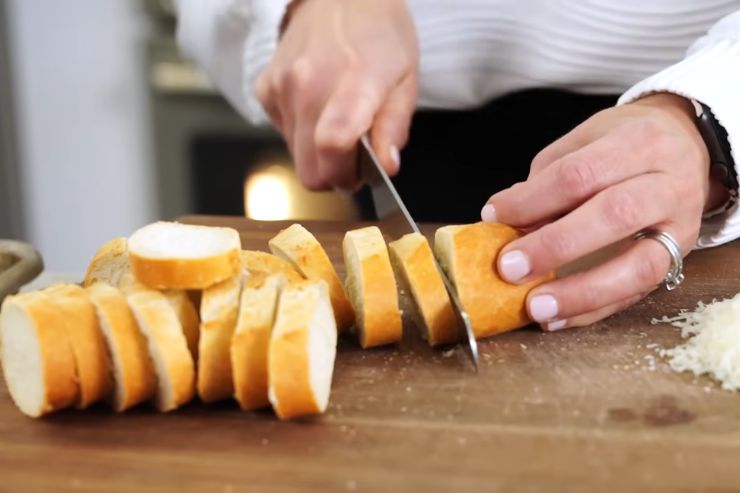
1 baguette, sliced into rounds about ¾ inch thick: Soaks up broth while holding enough structure to stay in one piece once toasted.
4 ounces provolone cheese, sliced thin: Melts fast and stretches well, giving the top its gooey pull. Deli-sliced melts smoother than pre-packaged.
2 ounces Swiss cheese, shredded: Adds a mild, nutty note and browns evenly. Shred it yourself; pre-shredded bags carry a starch coating that turns grainy.
¼ cup grated Parmesan cheese: Goes on last since it browns fast, adding a sharp, salty crust once it hits the broiler.
Kitchen Equipment You’ll Need
- Dutch oven: for even, steady caramelization
- Wooden spoon: won’t scratch the pot
- Rimmed baking sheet: catches bubbling cheese
- Broiler-safe crocks: individual serving bowls
- Sharp chef’s knife: even, thin onion slices
- Ladle: portioning hot broth cleanly
Steps to Make Gordon Ramsay French Onion Soup
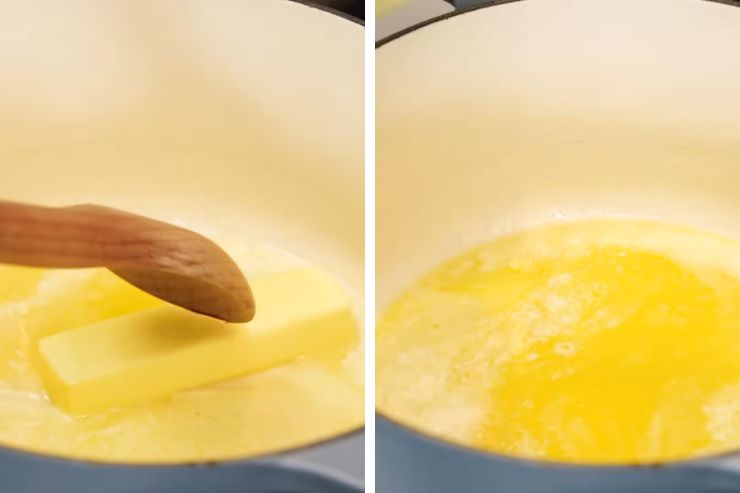
1. Melt the Butter and Oil: Warm the butter and olive oil together in a Dutch oven over medium heat until the butter melts and foams at the edges. Using both fats keeps the butter from scorching while still giving the pot a rounder flavor.
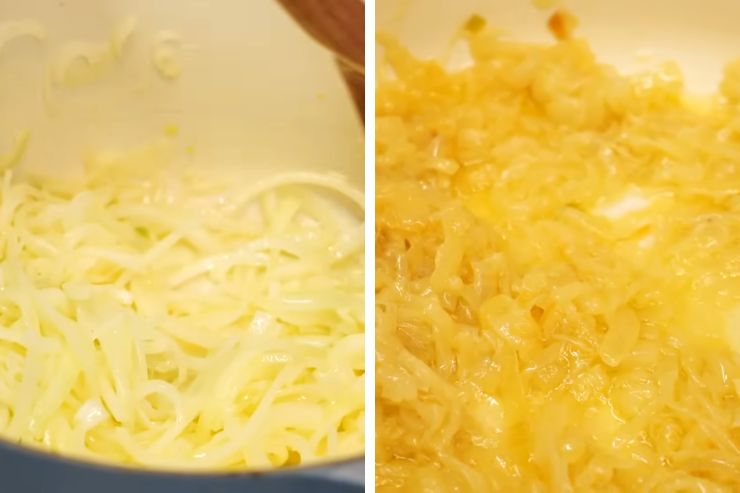
2. Caramelize the Onions: Add the sliced onions, stir once to coat, then drop the heat to medium-low and cook mostly undisturbed, stirring every 6 to 7 minutes. The pot looks overly full at first, then shrinks to about a third of its starting volume.
Aim for a deep amber color, not just light tan, which usually takes 35 to 45 minutes. Onions darkening faster than the rest need lower heat and a splash of water to loosen the fond before it turns bitter.
3. Add Thyme and Deglaze: Once the onions turn rich brown and smell sweet rather than sharp, stir in the thyme and cook for about a minute. Pour in the apple cider vinegar and scrape the bottom of the pot, lifting the browned bits.
Let it bubble for about a minute until the sharp vinegar smell mellows into something more rounded.
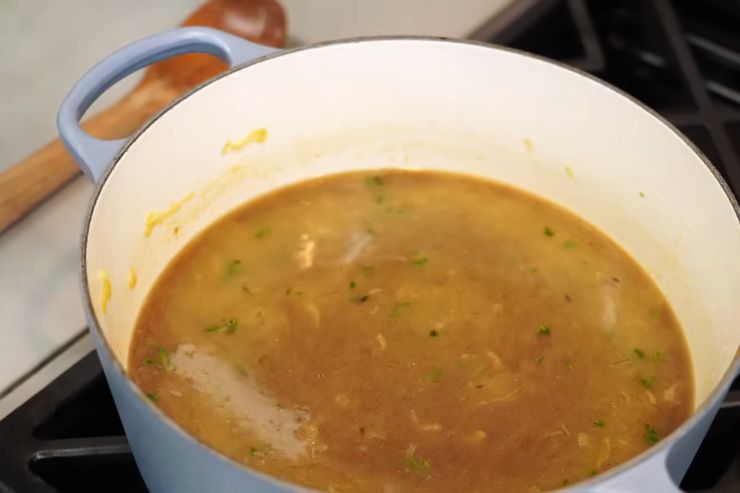
4. Add Broth and Simmer: Pour in the beef broth, season with salt and pepper, and bring to a light simmer. Cook uncovered for 28 to 30 minutes, stirring occasionally. Taste at the halfway point; the broth should taste rounded and savory, not thin, and gets a pinch more salt when it tastes flat.
5. Toast the Bread: While the soup simmers, lay the baguette slices on a baking sheet and toast at 375°F for 8 to 9 minutes, flipping once, until both sides turn firm and golden. Skipping this leaves bread that turns to mush the second it hits hot broth.
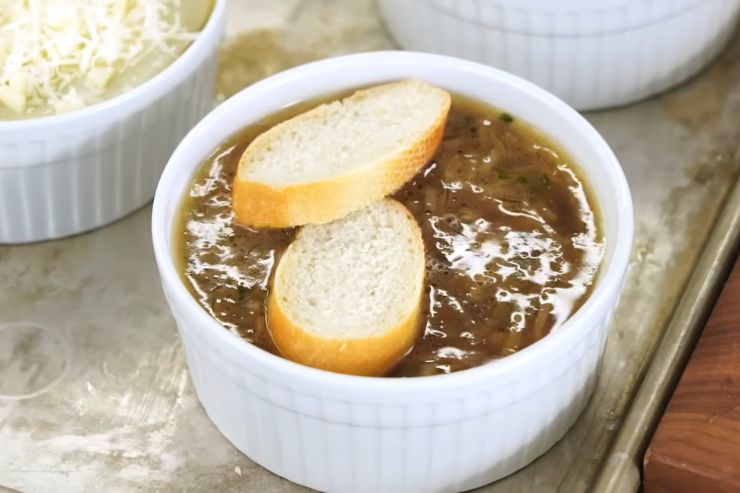
6. Assemble the Bowls: Ladle the hot soup into broiler-safe crocks, leaving about half an inch of room at the top. Float one or two toasted slices on each bowl, tearing pieces to fit as needed. Set the crocks on a rimmed baking sheet, since bubbling cheese can spill over.
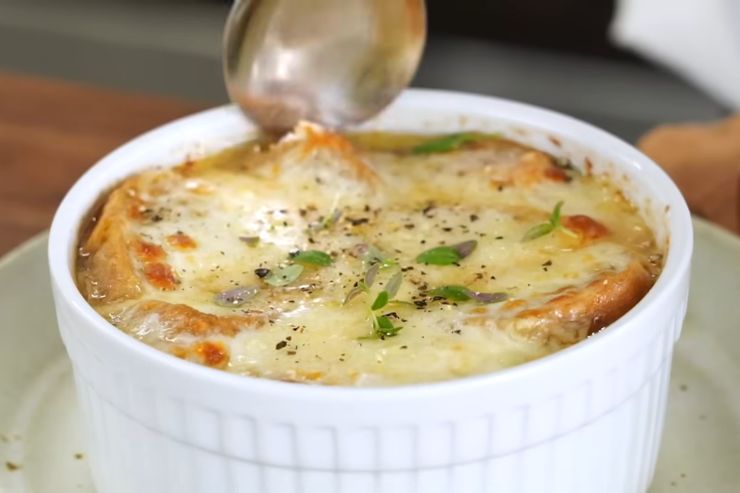
7. Layer the Cheese and Broil: Layer the provolone directly on the bread, scatter the Swiss over top, then finish with a light dusting of Parmesan. Broil for 2 to 3 minutes, watching closely, until the cheese turns golden brown and bubbly.
Pull it the moment it browns; a few extra seconds burns the top layer completely.
8. Finish and Serve: Top each bowl with a pinch of fresh thyme and another crack of pepper, then let it rest for 2 minutes. The crocks keep simmering slightly at the table, so give the cheese a moment to firm up first.
How to Fix Common French Onion Soup Problems
Onions won’t caramelize: The pot’s too crowded or the heat’s too low; use a wider pot and nudge up the burner.
Soup tastes too sweet: Balance it with a splash more apple cider vinegar or a small squeeze of lemon juice.
Onions taste burnt: The heat ran too hot for too long; scoop out the darkest pieces instead of stirring them through.
Soup tastes bitter: Usually traces to onions that caramelized too fast; next round, stretch the time and lower the heat.
Cheese slides off the bread: The bread’s too dry to hold the melt; brush it with broth before layering cheese.
Soup tastes flat: A pinch more salt, or a fresh splash of vinegar, wakes up a pot that reduced too plain.
My Best Tips for Rich, Flavorful French Onion Soup
Caramelization is everything: This step builds nearly all the flavor in the bowl, so don’t rush past 35 to 45 minutes.
Keep the heat at medium-low: High heat browns the outside before the inside softens, leaving a harsher flavor.
Stir every 6 to 7 minutes, not constantly: Onions need contact time with the pot to build color.
Use a concentrated stock: A good beef base gives the broth a savory backbone that thin broth can’t match.
Toast bread until firm, not just warm: A softer slice collapses the second broth touches it.
Watch the broiler the entire time: Cheese goes from browned to burnt in under 30 seconds.
Simple Ways to Customize This Soup
Vegetarian Version: Swap the beef broth for a mushroom-based vegetable stock; the vinegar still does its job the same way.
Gluten-Free Version: Use a gluten-free baguette or sturdy sandwich loaf, toasted the same way so it holds up in the broth.
Dairy-Free Version: Replace the butter with extra olive oil and use a melting dairy-free cheese instead of provolone and Swiss. It still browns, though it won’t stretch quite the same.
Keto Version: Skip the bread and top each bowl with cheese only, broiled until it forms a lacy, crisp crust.
Short Rib Addition: Add shredded, braised beef short ribs to the bottom of each bowl, turning a starter into a full dinner.
Weeknight Shortcut: Use pre-sliced onions and store-bought beef broth to cut prep time roughly in half. Caramelization still needs its full stretch of time.
Can You Make French Onion Soup in a Slow Cooker or Instant Pot?
A slow cooker can caramelize onions, though it takes far longer than the stovetop, usually 8 to 10 hours on low, and the color stays lighter with less direct contact against a hot surface.
An Instant Pot or other pressure cooker speeds up the broth stage once the onions are done, but it can’t replace the slow caramelization that builds the deepest flavor here.
Sautéing the onions on the sauté setting first, then switching to broth and pressure for the final simmer, gives a reasonable shortcut without losing too much color.
Between the two, the slow cooker gets closer to a proper caramelized base, though neither one quite matches a wide pot on the stovetop.
What to Serve with French Onion Soup
French onion soup is typically served as an appetizer in a French bistro. However, if you use a bigger bowl and add more bread, it can become a filling meal.
A simple green salad with a tangy vinaigrette helps balance the richness of the soup, especially if you use bitter greens like arugula or radicchio.
A crusty loaf is great on the side for those who like to soak up the last of the broth. Roasted chicken thighs or a simple steak make good main dishes when the soup starts the meal.
Serve the soup in individual bowls right after it comes out from under the broiler because the cheese hardens in a few minutes. On a cold night, this soup works well as a starter, followed by roasted chicken and a salad of bitter greens.

How to Store and Reheat French Onion Soup
You can freeze caramelized onions, which makes it easier to prepare soup on busy days.
Refrigerator: Store the soup base in an airtight container for up to 4 days. Do not add bread or cheese because they get soft.
Freezer: Freeze the broth and onions in a freezer-safe container for up to 3 months. Leave some space for the soup to expand. Thaw it overnight in the fridge before reheating. Avoid freezing bowls with bread and cheese on top, as they become mushy when thawed.
Reheating: Heat the soup base over medium-low heat until it simmers. Prepare the topping fresh to keep the bread from getting soggy.
Holiday prep: For Thanksgiving or big dinners, make the onion base up to 2 days in advance. Store it separately, and assemble and broil everything just before serving.
Gordon Ramsay French Onion Soup FAQs
1. What cheese does Gordon Ramsay use for French onion soup?
His classic version leans on Gruyère alone, though this Gordon Ramsay French Onion Soup Recipe splits the topping between provolone, Swiss, and Parmesan for a milder, gooier melt with a sharper crust on top.
2. What is Lincolnshire Poacher cheese, and do I need it?
It’s a firm, savory English cheddar-style cheese sometimes used in upscale French onion soup instead of Gruyère. It’s not needed here; Swiss or Gruyère gets close enough without a trip to a specialty cheese shop.
3. Can this recipe be made vegetarian?
Yes, swap the beef broth for a mushroom-based vegetable stock, which keeps a similar savory backbone. The onions caramelize the same way regardless of what broth follows them, so the base of the recipe barely changes.
4. Can I make it keto or low carb?
Skip the bread and broil the cheese directly over the soup, letting it form a thin, crisp layer instead of melting over a crouton. The onions themselves carry very little starch on their own.
5. Do I need a broiler, or can I brown the cheese another way?
A broiler gives the fastest, most even browning, but a very hot 500°F oven works too, though it takes closer to 6 to 8 minutes instead of 2 to 3.
6. What’s the best pot for this recipe?
A wide, heavy Dutch oven works best; it gives the onions room to caramelize evenly instead of steaming in a pile.
7. Why do restaurant versions taste richer than mine at home?
Restaurant kitchens usually simmer beef bones for hours to build a stock far more concentrated than anything from a carton. A good beef base instead of thin broth closes most of that gap.
8. Is this soup spicy, and can I add heat?
It’s not spicy as written, since the pepper stays light and the rest of the ingredients are mild. A pinch of cayenne added with the thyme brings gentle heat without covering up the onion flavor underneath it.

Gordon Ramsay French Onion Soup Recipe
Make this Gordon Ramsay French Onion Soup Recipe with deeply caramelized onions, rich beef broth, toasted bread, and bubbly melted cheese.
Ingredients
- 3 pounds yellow onions, thinly sliced
- 4 tablespoons unsalted butter
- 2 tablespoons olive oil
- 1 tablespoon fresh thyme leaves
- 2 tablespoons apple cider vinegar
- 6 ½ cups beef broth
- 1 teaspoon kosher salt
- ½ teaspoon cracked black pepper
- 1 baguette, sliced into ¾-inch rounds
- 4 ounces provolone cheese, thinly sliced
- 2 ounces Swiss cheese, shredded
- ¼ cup Parmesan cheese, grated
Instructions
- Warm the butter and olive oil together in a Dutch oven over medium heat until the butter melts and foams at the edges. Using both fats keeps the butter from scorching while still giving the pot a rounder flavor.
- Add the sliced onions, stir once to coat, then drop the heat to medium-low and cook mostly undisturbed, stirring every 6 to 7 minutes. The pot looks overly full at first, then shrinks to about a third of its starting volume.
- Aim for a deep amber color, not just light tan, which usually takes 35 to 45 minutes. Onions darkening faster than the rest need lower heat and a splash of water to loosen the fond before it turns bitter.
- Once the onions turn rich brown and smell sweet rather than sharp, stir in the thyme and cook for about a minute. Pour in the apple cider vinegar and scrape the bottom of the pot, lifting the browned bits.
- Let it bubble for about a minute until the sharp vinegar smell mellows into something more rounded.
- Pour in the beef broth, season with salt and pepper, and bring to a light simmer. Cook uncovered for 28 to 30 minutes, stirring occasionally. Taste at the halfway point; the broth should taste rounded and savory, not thin, and gets a pinch more salt when it tastes flat.
- While the soup simmers, lay the baguette slices on a baking sheet and toast at 375°F for 8 to 9 minutes, flipping once, until both sides turn firm and golden. Skipping this leaves bread that turns to mush the second it hits hot broth.
- Ladle the hot soup into broiler-safe crocks, leaving about half an inch of room at the top. Float one or two toasted slices on each bowl, tearing pieces to fit as needed. Set the crocks on a rimmed baking sheet, since bubbling cheese can spill over
- Layer the provolone directly on the bread, scatter the Swiss over top, then finish with a light dusting of Parmesan. Broil for 2 to 3 minutes, watching closely, until the cheese turns golden brown and bubbly.
- Pull it the moment it browns; a few extra seconds burns the top layer completely.
- Top each bowl with a pinch of fresh thyme and another crack of pepper, then let it rest for 2 minutes. The crocks keep simmering slightly at the table, so give the cheese a moment to firm up first.
Nutrition Information:
Yield: 6 Serving Size: 1Amount Per Serving: Calories: 470
Gordon Ramsay French Onion Soup Recipe focuses on how patient you need to be with the onions before you do anything else. Cooking the onions on low heat for 35 minutes is crucial for the final dish; it makes a bigger difference than any toppings you add later.
The broth, toasted bread, and broiler all rely on those onions being cooked slowly until they turn a deep brown.