
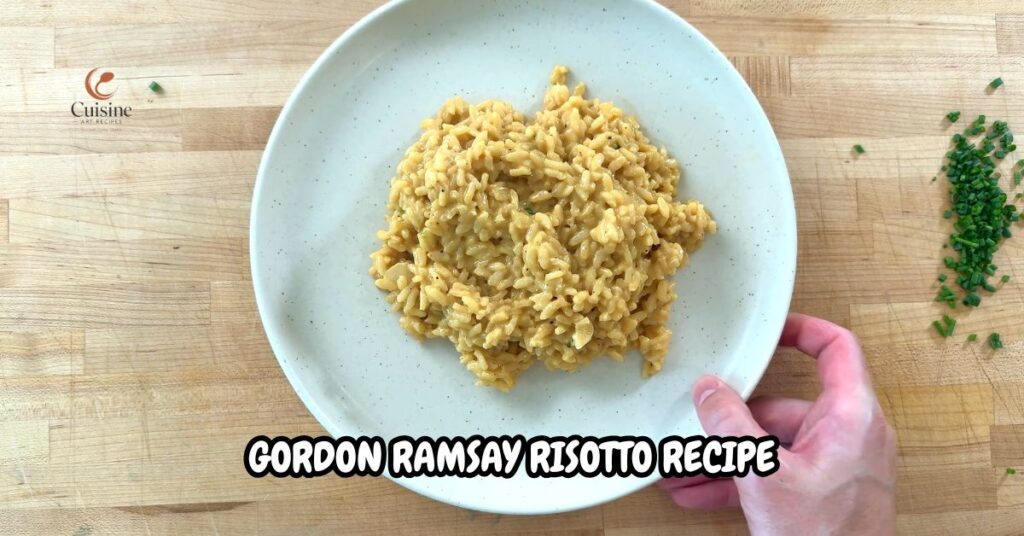
My Gordon Ramsay risotto recipe has been my weekend project for about 10 years. My dad tastes every pot and writes his notes on the back of an envelope.
The inspiration comes from Gordon Ramsay’s Hell’s Kitchen. Known for its red and blue kitchens, the show often sends contestants back to the stove over a bad pot of risotto. The Las Vegas restaurant of the same name carries that signature look.
For this copycat recipe, I use the stovetop method, with a wide pan and stock added one ladle at a time. Stirring takes about 19 minutes, giving you the most control over the texture while requiring the most attention.
How I Fixed Homemade Risotto That Turns Gluey or Chalky
In my last few tries, the rice has either turned to paste or stayed chalky in the center. Both problems come from the same place: how the starch leaves the grain.
Arborio is short and plump, with an outer layer rich in a starch called amylopectin. Stirring gradually releases that starch into the liquid. Long-grain rice has far less of it, so it never builds the same creamy sauce.
Gluey rice usually means the pot sat too long after the grains had softened. Chalky rice usually means the liquid was too cool, slowing the cooking process in the center. Warm stock keeps the rice cooking at a steady simmer. Plan on about 2½ cups of stock per cup of rice.
Ramsay’s method helps fix both problems. Toasting the dry rice, called tostatura in Italian, helps the grains hold their shape. The final beating in of cold butter and cheese, called mantecatura, builds the sauce at the last minute.

Ingredients for Gordon Ramsay Risotto
4⅓ cups low-sodium chicken stock: This is the cooking liquid, and it must be hot so the rice never stalls. I reach for Kitchen Basics unsalted. Salted cartons reduce into a salt trap by the last ladle. Swap in seafood stock when lobster or scallops are on the plate. Vegetable stock gives a lighter body, since it lacks the gelatin from bones. Amounts stay the same.
1½ cups Arborio rice: Its plump grains stay firm at the core while the outside softens. Riso Scotti is the bag I keep on the shelf. Never rinse it, since that washes off the starch. Carnaroli works in place of Arborio. It holds its shape a bit longer, so overcooking is harder.
2 tablespoons olive oil: Oil handles the early high heat that would scorch butter. California Olive Ranch is my bottle. Save any peppery finishing oil for drizzling, since hard heat turns it bitter.
1 large shallot, finely minced: Shallot softens in about 2 minutes and adds gentle sweetness through its natural sugars. I buy loose bulbs at Whole Foods. Pick firm ones with dry, tight skins. A small yellow onion works in its place. Use about ⅓ cup and expect a sharper bite.
1 large garlic clove, thinly sliced: Thin slices flavor the oil without scorching as fast as minced garlic. I grab the mesh bag at Aldi. Add the slices after the shallot, never before, because they turn bitter in seconds.
1 tablespoon lemon juice: Acid cuts through the butter and loosens the browned bits stuck to the pan. I use 2 teaspoons in the pan and 1 teaspoon at the finish. Fresh Meyer lemons taste rounder than bottled juice. Apple cider vinegar works in a pinch. Use 2 teaspoons total for a sharper edge.
3½ tablespoons cold unsalted butter, cubed: Cold cubes melt slowly into the hot rice and bind with the starchy liquid. That emulsion gives the pot its shine. Kerrygold unsalted is my pick. Keep the cubes chilled until the final minute.
2 tablespoons mascarpone: Mascarpone adds fat and body, so the sauce stays smooth even as the pot cools a little. BelGioioso is the tub I buy, found by the cream cheese. Stir it in off the heat to avoid curdling. Full-fat cream cheese also works. It adds a slight tang and a tighter sauce.
50 g finely grated Parmigiano-Reggiano (about 5 tablespoons): Aged cheese brings salt and savory depth, and its fat melts into the sauce. The Kirkland Signature wedge from Costco is what I grate. Skip bagged shreds, since the anti-caking powder stops them from melting smoothly.
1 scant teaspoon kosher salt and ¼ teaspoon black pepper: Season the toasting rice lightly, then taste at the end, since the cheese and stock both carry salt. Diamond Crystal is my box, and its light flakes forgive a heavy hand.
1 tablespoon chopped chives: Chives add a mild onion note that cuts through the butter. The potted chives from Trader Joe’s sit on my windowsill and regrow after every snip. Cut them with scissors, since a knife bruises the thin tubes.
Required Kitchen Equipment
- 12-inch stainless steel pan: Wide surface, even evaporation
- Small saucepan: Keeps stock steaming
- Ladle: Half-cup size works best
- Flat-edged wooden spoon: Scrapes pan corners cleanly
- Microplane grater: Fine, fluffy Parmesan
- Chef’s knife and cutting board: Thin garlic, fine shallot
How to Make Gordon Ramsay Risotto
1. Warm the Stock: I poured 4⅓ cups of stock into a small saucepan over low heat. It should steam gently and never boil. Cold stock would drop the pan temperature with every ladle. Look for steam and no rolling bubbles.
2. Prep the Aromatics: While it heated, I sliced the garlic thin and minced the shallot fine. Then I cubed the butter and slid the pieces into the fridge. A damp towel under the board kept it steady.
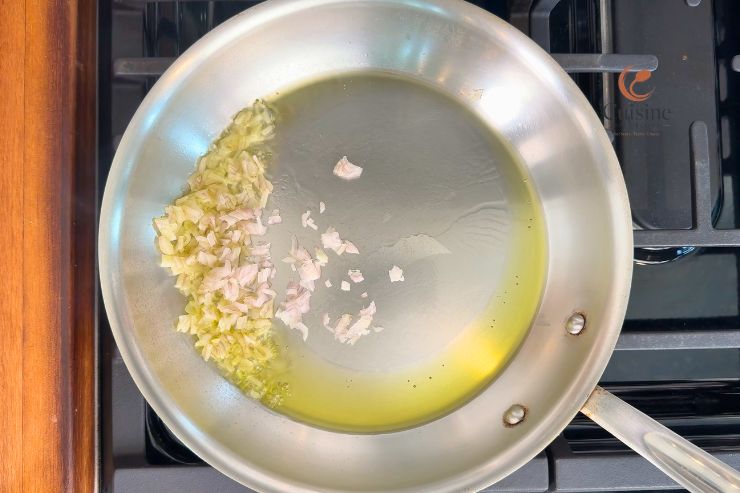
3. Soften the Shallot: I heated 2 tablespoons of olive oil in a 12-inch stainless pan over medium-high heat. The shallot cooked for about 2 minutes, until the edges turned pale gold and smelled sweet. My back-left burner runs hot, and one early batch scorched while I answered a text. When the pan smokes, lift it off the heat and splash in more oil.
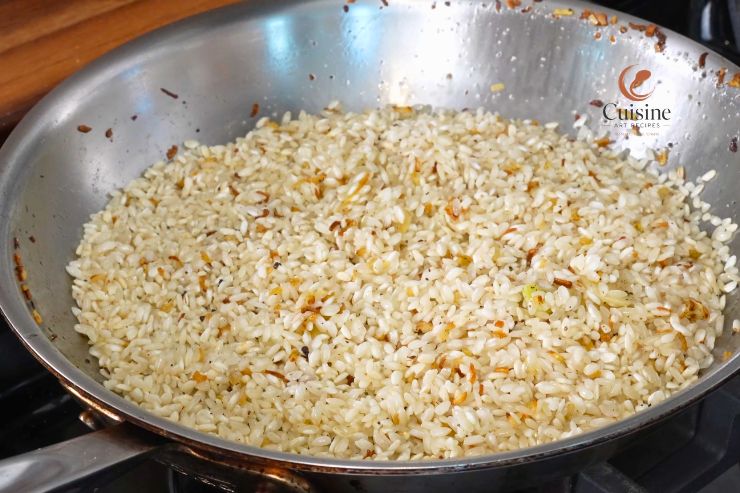
4. Toast the Rice: The garlic cooked for 1 minute. Then 1½ cups of rice went in, with half the salt and all the pepper. I stirred for about 2 minutes, until the grain tips turned translucent and the pan smelled nutty.
5. Deglaze the Pan: I mixed ⅔ cup of hot stock with 2 teaspoons of lemon juice and poured it in. It hissed hard, and the bright smell settled in about 1 minute. I scraped the bottom as it was reduced. The pan was ready when no liquid pooled and the rice looked damp, not wet.
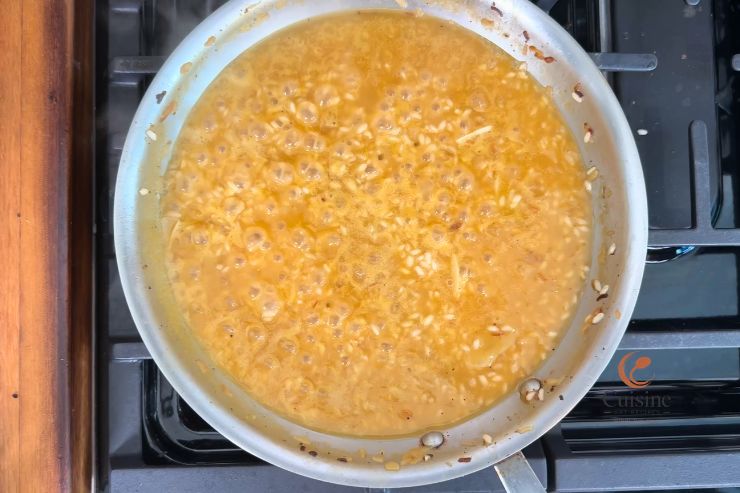
6. Ladle and Stir: I added stock ½ cup at a time, stirring steadily. Once a spoon dragged along the bottom left a brief trail, the next ladle went in. My pot needed 19 minutes. A short rest for your arm does no harm. The rice should look like loose porridge, with sauce that flows slowly back after the spoon passes.
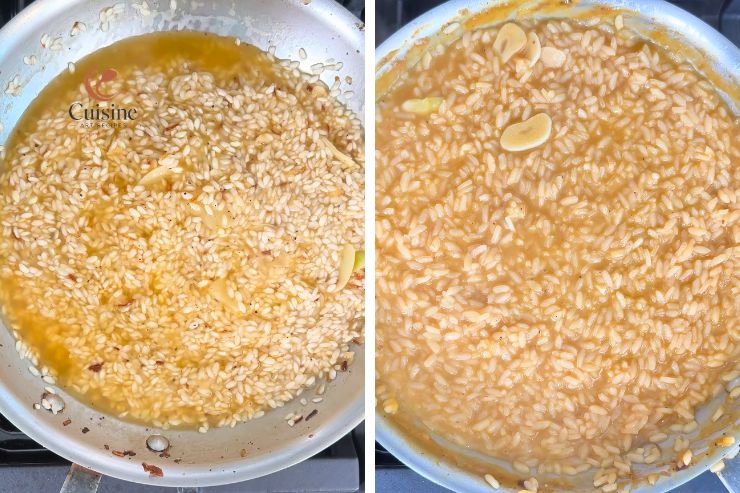
7. Taste for Doneness: At 16 minutes, I started tasting. The rice should hold a slight bite at the center, with no white chalk. Hard grains with no stock left need ¼ cup hot water and 2 more minutes. Pot too loose: stir another minute over the heat.
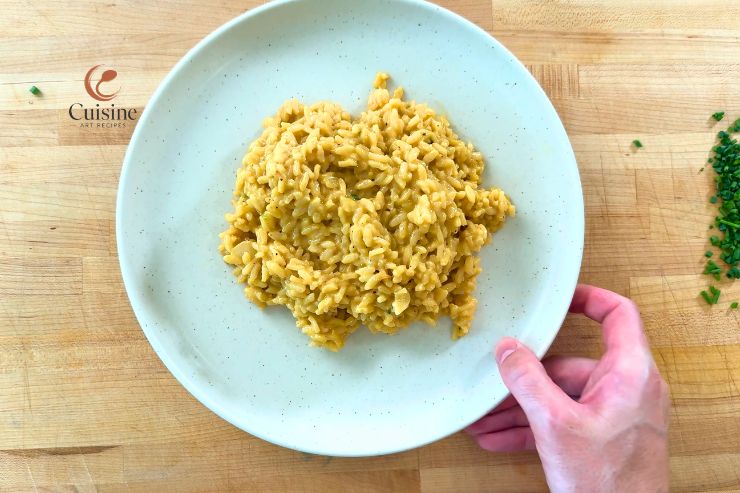
8. Finish Off the Heat: I pulled the pan off the burner. The cold butter went in first, then 2 tablespoons of mascarpone and 50 g of Parmesan. I beat it hard for 30 seconds. The risotto should spread slowly when I tilt the pan. Mine hit the plate glossy, with tiny bubbles still popping near the edge.
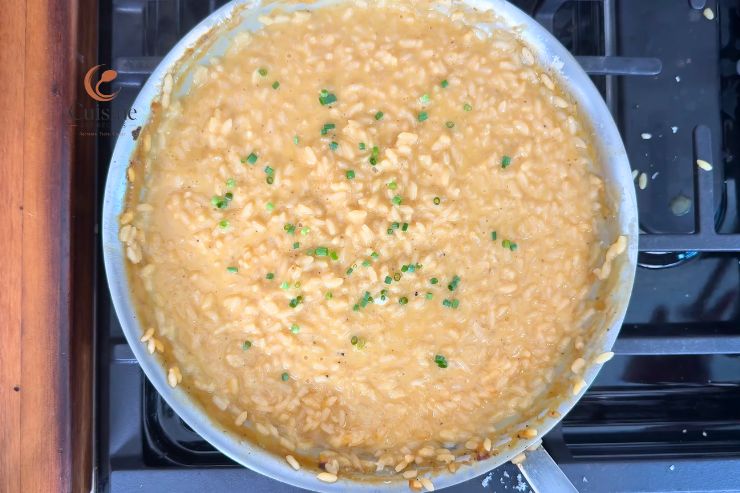
9. Season and Serve: I stirred in the chives and the last teaspoon of lemon juice, then tasted. The cheese adds plenty of salt, so add the rest only as needed. Warm bowls matter, because risotto tightens within minutes. Tapping the bowl on the counter levels it.
Alternative Cooking Methods
Oven method: toast the rice and add the lemon-stock splash in a Dutch oven on the stove. Pour in all the hot stock, cover, and bake at 350°F for about 25 to 30 minutes. Stir well afterward, then finish with butter and cheese as written.
Instant Pot method: sauté the aromatics and rice, then add the lemon-stock splash and scrape the bottom. Pour in the remaining stock, lock the lid, and cook at high pressure for 6 minutes. Release pressure quickly, then stir in the butter and cheese.
Trade-offs: the oven and pressure methods skip the ladling, and the pressure cooker finishes fastest. Both skip the constant friction that builds starch, so beat the finish hard and loosen it with warm stock as needed.
Chef Special Tips for Gordon Ramsay Risotto
1. Greasy, Split Sauce: The butter warmed too long. Take the pan off the burner, stir in 2 tablespoons warm stock, and beat hard.
2. Scorched Corners: The flame is too wide for the pan. Drop to medium-low and nudge the rice inward with a flat-edged spoon.
3. Mushy, Sticky Grains: A narrow, deep pot packs the rice. Move to a 12-inch pan so the layer stays shallow.
4. Stiff Plate: Risotto tightens as it cools. Loosen it with 2 tablespoons warm stock before spooning it out.
5. Salty Result: Salted stock reduced too far. Stir in ¼ cup hot water, then taste again.
How I Customize This Gordon Ramsay Risotto
Mushroom: Sauté 8 ounces of sliced cremini in a separate pan for 6 minutes. Fold them in at the end. Their browned edges add earthy depth, and I serve this one with seared steak.
Lemon and Pea: Stir in ½ cup thawed peas and the zest of one lemon with the cheese. The zest cuts the butter while the peas add pops of sweetness. It sits well beside a salmon dish.
Saffron: Steep a generous pinch of saffron in the warm stock for 10 minutes. It tints the rice gold and adds a floral note that suits scallops.
Roasted Butternut: Fold in 1 cup of roasted squash cubes at the end. Their caramelized sugars deepen the flavor. I cook this one on cold October nights, with roast chicken.
Crispy Sage: Fry 8 sage leaves in 1 tablespoon of butter for 1 minute, until crisp. Break them over the top for a nutty crunch. This is my pick for a plain weeknight bowl.
What I Serve With Gordon Ramsay Risotto
Lobster tails are the classic partner, and they suit the buttery base. I broil them for 6 to 7 minutes with a smear of garlic butter. Seared scallops work the same way and need about 2 minutes per side. Squeeze lemon over either one before plating.
For something heartier, pan-seared steak or roasted chicken thighs leave juices that spoon well over the rice. Pour a spoonful around the edge of the bowl. A sharp arugula salad dressed with lemon cuts the richness between bites.
Roasted asparagus at 425°F for about 10 minutes adds a charred bite. Trim the woody ends first, and toss the spears in 1 tablespoon of olive oil. Skip the garlic bread, since the rice already carries plenty of starch.
My favorite full plate puts a lobster tail on top of the rice, with six asparagus spears alongside. A tall glass of Sweet Papaya Juice finishes it. My brother-in-law asked for a second tail.
How I Store Gordon Ramsay Risotto
Cool leftovers within 2 hours, then spoon them into a shallow, airtight glass container. A thin layer cools faster, and glass holds no odors. Hot rice left out longer can grow bacteria, so speed matters. Refrigerate for up to 3 days.
Cold risotto sets into a firm block as the starch tightens. Reheat it in a saucepan over low heat with ¼ cup of stock for each cup of rice. Stir until it loosens, about 4 minutes.
The microwave works at 50 percent power, in 1-minute bursts, with a splash of stock stirred in after each one. Heat it to 165°F in the center. I skip the freezer, because the butter and cheese sauce can separate once thawed.
A strip of masking tape with the date keeps track of the 3-day window. Store the container on a middle shelf, where the temperature stays steadier than in the door. Use it within that window for the best texture.
Turning Leftover Gordon Ramsay Risotto Into Something New
Arancini start with risotto that is 2 days old or less and chilled for at least 4 hours. Press a mozzarella cube into a golf-ball-size scoop. Dip it in beaten egg, roll it in panko, and fry at 350°F for 3 minutes.
Cold risotto also shapes into patties. Dust them with flour and pan-fry in butter for 3 minutes per side. A fried egg on top turns one into breakfast.
Use either method within 2 days, and keep the risotto cold until you shape it. Older rice dries out and falls apart in the pan. Wet hands keep the sticky rice off your fingers.
Gordon Ramsay Risotto FAQs
1. Can I use jasmine or long-grain rice?
No. Jasmine and other long-grain rice carry little surface starch, so the liquid never thickens into a sauce. Short-grain Arborio has the plump, starchy body this method depends on. Basmati behaves the same way as jasmine.
2. Can I use a nonstick pan?
Yes. Nonstick cuts down on sticking, though the shallot browns less. Keep the heat at medium and use a wooden spoon, because metal utensils scratch the coating. Expect a slightly softer, paler base than stainless gives.
3. Can I prepare it ahead for guests?
Stir the rice for about 12 minutes, then spread it on a sheet pan so it cools fast. Later, finish it in a pan with warm stock, then add the butter and cheese at the last moment.
4. Is it gluten-free?
The rice and cheese are naturally gluten-free. Check the stock label for wheat-based flavorings, since some cartons list them. A quick look at the Parmesan label for added fillers is also worth the few seconds.
5. Can I make it vegetarian?
Yes. Use vegetable stock and a vegetarian hard cheese. Traditional Parmigiano-Reggiano uses animal rennet, so look for a label that says vegetarian. The sauce stays creamy because the butter and mascarpone do most of the work.
6. How do I add heat?
Pass chili oil at the table, so each bowl gets its own amount. A few drops go a long way. The fat in the mascarpone softens the burn, so start small and taste.
7. Can I use water instead of stock?
Water thins the flavor, so the pot needs extra salt and another tablespoon of Parmesan. Stock gives the rice its savory base, so use it when you can. Add the extra salt only after tasting the finished pot.
8. Should the risotto rest before serving?
A 1-minute rest off the heat lets the sauce settle into a loose, flowing pool. Past 3 minutes, it starts to tighten in the pan. Warm bowls buy you a little extra time at the table.
Gordon Ramsay Risotto Recipe
Gordon Ramsay Risotto Recipe with cold butter and mascarpone stirred in off the heat. Warm stock, toasted Arborio, ready in 42 minutes.
Ingredients
- 4⅓ cups low-sodium chicken stock
- 1½ cups Arborio rice
- 2 tablespoons olive oil
- 1 large shallot, finely minced
- 1 large garlic clove, thinly sliced
- 1 tablespoon lemon juice
- 3½ tablespoons cold unsalted butter, cubed
- 2 tablespoons mascarpone
- 50 g finely grated Parmigiano-Reggiano
- 1 scant teaspoon kosher salt
- ¼ teaspoon black pepper
- 1 tablespoon chopped chives
Instructions
- I poured 4⅓ cups of stock into a small saucepan over low heat. It should steam gently and never boil. Cold stock would drop the pan temperature with every ladle. Look for steam and no rolling bubbles.
- While it heated, I sliced the garlic thin and minced the shallot fine. Then I cubed the butter and slid the pieces into the fridge. A damp towel under the board kept it steady.
- I heated 2 tablespoons of olive oil in a 12-inch stainless pan over medium-high heat. The shallot cooked for about 2 minutes, until the edges turned pale gold and smelled sweet. My back-left burner runs hot, and one early batch scorched while I answered a text. When the pan smokes, lift it off the heat and splash in more oil.
- The garlic cooked for 1 minute. Then 1½ cups of rice went in, with half the salt and all the pepper. I stirred for about 2 minutes, until the grain tips turned translucent and the pan smelled nutty.
- I mixed ⅔ cup of hot stock with 2 teaspoons of lemon juice and poured it in. It hissed hard, and the bright smell settled in about 1 minute. I scraped the bottom as it was reduced. The pan was ready when no liquid pooled and the rice looked damp, not wet.
- I added stock ½ cup at a time, stirring steadily. Once a spoon dragged along the bottom left a brief trail, the next ladle went in. My pot needed 19 minutes. A short rest for your arm does no harm. The rice should look like loose porridge, with sauce that flows slowly back after the spoon passes.
- At 16 minutes, I started tasting. The rice should hold a slight bite at the center, with no white chalk. Hard grains with no stock left need 1/4 cup hot water and 2 more minutes. Pot too loose: stir another minute over the heat.
- I pulled the pan off the burner. The cold butter went in first, then 2 tablespoons of mascarpone and 50 g of Parmesan. I beat it hard for 30 seconds. The risotto should spread slowly when I tilt the pan. Mine hit the plate glossy, with tiny bubbles still popping near the edge.
- I stirred in the chives and the last teaspoon of lemon juice, then tasted. The cheese adds plenty of salt, so add the rest only as needed. Warm bowls matter, because risotto tightens within minutes. Tapping the bowl on the counter levels it.
Notes
Keep the stock warm and the butter cold, and serve right away, since risotto tightens within minutes. For a strict Italian version, skip the mascarpone and add 1 extra tablespoon of butter.
Nutrition Information:
Yield: 4 Serving Size: 1Amount Per Serving: Calories: 510
Everything before that moment asks only for warm stock and a slow ladle. Cook it on a quiet evening, with a lobster tail resting nearby. Ramsay’s method rewards patience far more than skill.