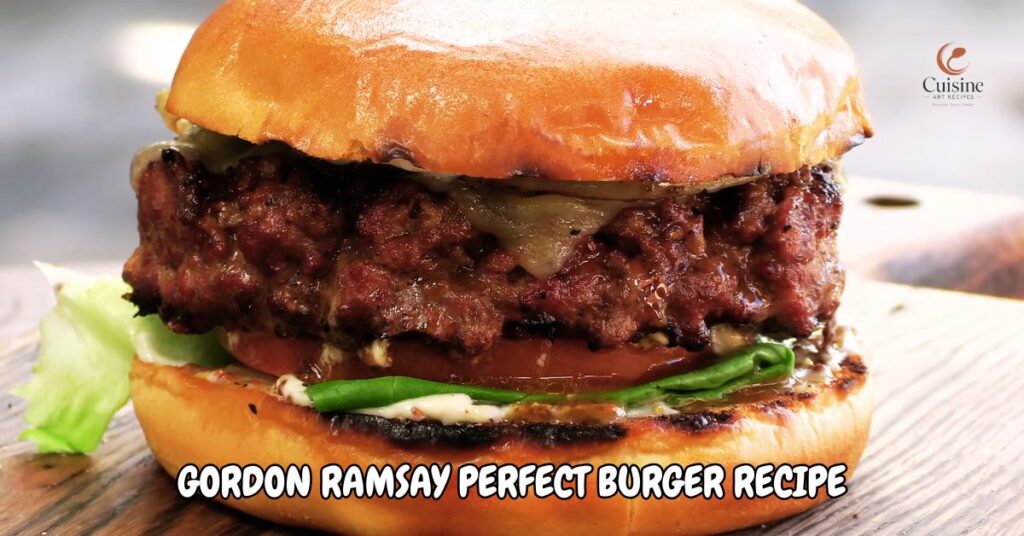
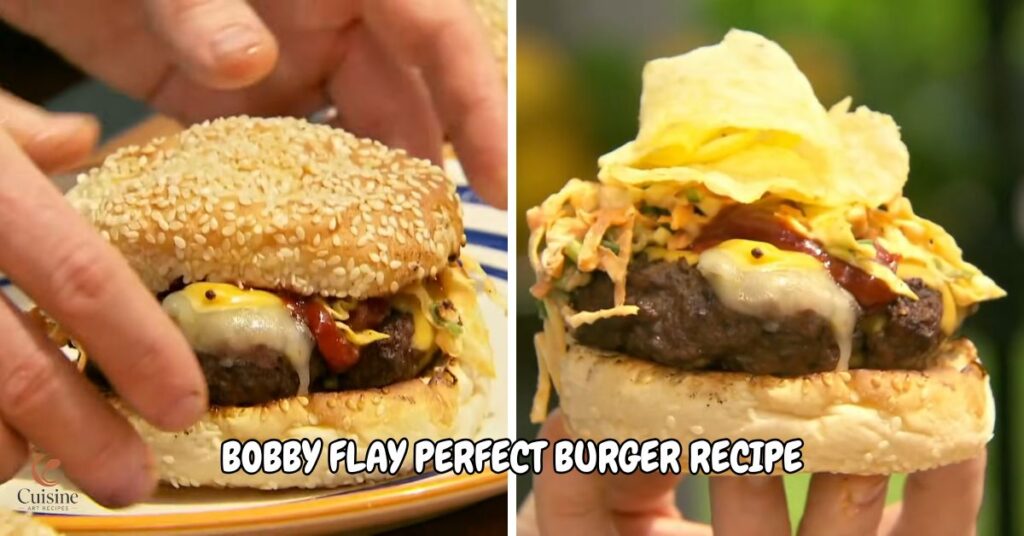
My neighbor Gary showed up at my back fence last July holding a paper plate and a fork, no plate of his own waiting yet, just standing there sniffing the char coming off my grill. He’d climbed his own fence to get here faster.
That’s the kind of pull a good burger has. My father-in-law grills every Sunday from March through October, rain or shine, and he taught me most of what I know about a hot grate and a patient hand. But the technique that actually changed how I cook burgers came from watching Bobby Flay explain his method on Food Network years ago.
He kept it so simple I almost missed it. Two ingredients for seasoning. One thumbprint trick. A ratio he never budges on. I tested his approach in my own kitchen, on a rusty old propane grill my husband keeps threatening to replace.
This Bobby Flay Perfect Burger Recipe is what came out of that testing, built for home cooks who want fewer steps and better results.
What Is Bobby Flay’s Perfect Burger?
This recipe is a home cook’s version of the burger method Bobby Flay has shared publicly on Food Network and in interviews about his Bobby’s Burgers chain. It is not his proprietary restaurant formula, just my attempt to follow the technique he’s described for cameras.
Flay built his burger reputation over three decades of shows and cookbooks, but his home method stays almost stripped down. Salt and pepper handle all the seasoning. No onion powder, no Worcestershire, no egg or breadcrumb filler mixed into the meat.
That minimal ingredient list is the real difference between this and most celebrity burger recipes. Plenty of chefs build flavor by stacking seasonings into the patty itself. Flay does the opposite and lets the beef and the crust do the work.
Why I Love Bobby Flay Perfect Burger
An 80/20 fat ratio keeps this patty juicy without any tricks or add-ins. The fat renders as it cooks and bastes the meat from inside, so you get moisture without mixing in butter or broth like some recipes call for.
Nobody needs a shopping list to make this. Ground beef, salt, pepper, oil, a bun. That’s the whole roster, which makes it a solid pick for a first-time griller or a kid learning to cook.
The texture holds up because the meat stays loosely packed instead of compressed into a dense hockey puck. Once the base patty is right, toppings are wide open. Cheese, bacon, a fried egg, whatever’s sitting in the fridge that Tuesday.
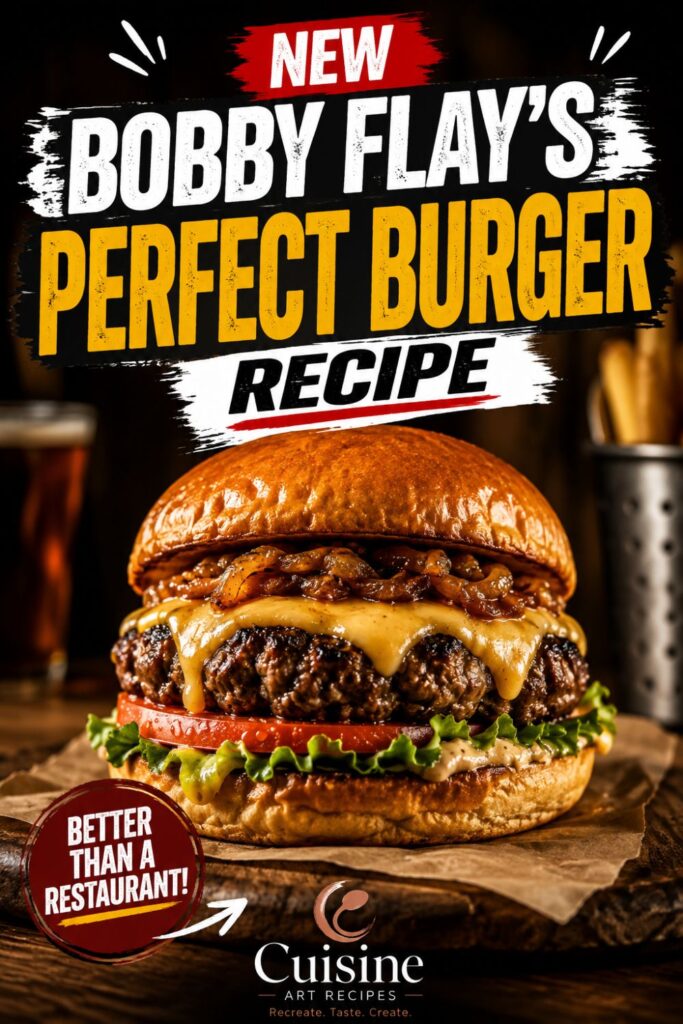
Ingredients for Bobby Flay Perfect Burger Recipe
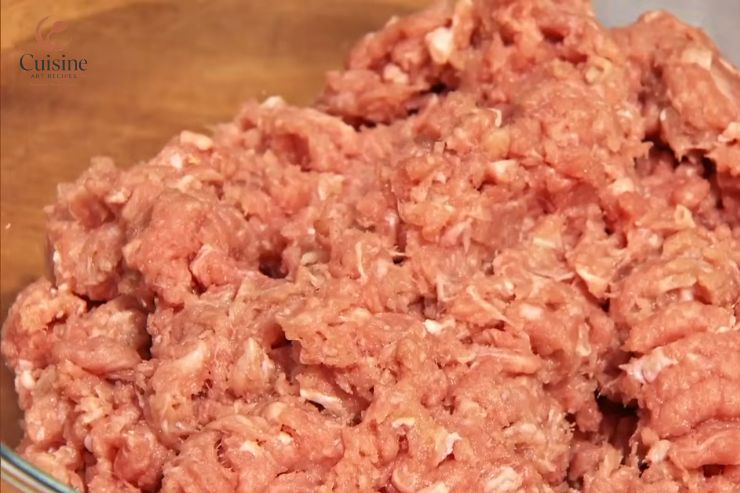
2 pounds ground chuck (80/20 fat ratio): This is the entire flavor engine of the burger. The fat renders while the patty cooks, keeping the inside moist and helping the outside form a real crust. I buy mine fresh from the butcher counter at my local Kroger the same day I plan to cook it.
When you can only find 85/15, the burger will still taste fine, but it dries out faster past medium doneness.
1 heaping tablespoon kosher salt: Salt is one of exactly two seasonings in this recipe, so it has to do real work. It draws moisture to the surface early, which helps the crust form once the patty hits hot metal. I use Diamond Crystal, since Morton’s is saltier by volume and can oversalt the meat when swapped cup for cup.
1 scant tablespoon freshly cracked black pepper: Pre-ground pepper turns dusty and bitter fast, so I always crack mine right before the patties go on. It adds bite against the richness of the beef fat without competing with any other spice, since there isn’t one.
2 tablespoons canola oil: This coats the pan or grate, not the meat, and keeps the crust from tearing when you flip. Canola has a high smoke point, which matters at the heat this recipe needs. Grapeseed oil works well in place of it when that’s what’s already open in your pantry.
4 slices American cheese: American melts faster and smoother than sharper cheeses because of its emulsifiers, which is why it becomes part of the burger instead of just sitting on top. Land O’Lakes is the deli-counter brand I reach for most often.
4 potato hamburger buns: Potato buns hold up to juicy meat without falling apart in your hands, which matters more here than with a leaner patty. Martin’s is the brand I keep stocked in my freezer for burger nights.
2 tablespoons unsalted butter: Butter toasts the cut sides of the buns in a dry skillet, giving you a light crunch that keeps the bread from turning soggy under the meat and juices.
4 leaves Bibb lettuce: Bibb has a soft, cupped shape that holds toppings in place better than iceberg, and it skips the watery crunch that can slide a burger apart mid-bite.
1 large beefsteak tomato: Beefsteak tomatoes slice into wide, sturdy rounds that match the size of the bun. Look for one that’s heavy for its size and still slightly firm at the store, since a soft one turns the bun mushy fast.
½ small red onion, thinly sliced: Red onion brings sharp bite without needing to be cooked down first. Soak the slices in ice water for 6 minutes to soften that sharpness before building the burger.
8 dill pickle chips: Pickles cut through the fat of the beef and cheese with acid, which is why they go on last, right against the top bun. Vlasic is the jar I always have in my fridge door.
Mayonnaise, ketchup, and mustard: These round out the plate without needing a special sauce recipe. I keep Duke’s, Heinz, and French’s stocked, letting the beef carry most of the flavor instead of the condiments.
Equipment to Make This Burger
- Cast-iron skillet or grill: builds a deep crust
- Instant-read thermometer: confirms doneness without guessing
- Wide metal spatula: flips without tearing the crust
- Sheet pan: holds shaped patties before cooking
- Kitchen scale: keeps portions even
- Tongs: turns toppings on the side
How to Make Bobby Flay Perfect Burger
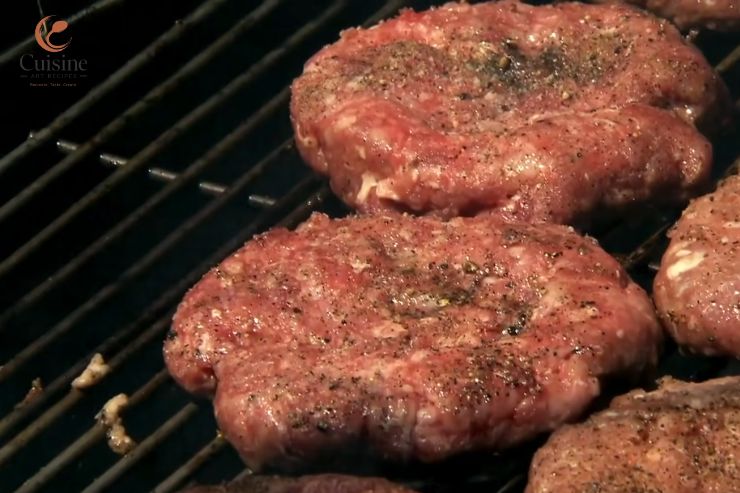
1. Season and Shape the Patties: I split two pounds of ground chuck into four six-ounce portions and season both sides heavily with kosher salt and cracked pepper. Loose handling matters here, so I only work the meat enough to form a ball, then press a shallow well into the center with my thumb.
The dent should stay about a half inch deep. When the meat springs right back to flat, it’s been packed too tight and needs a lighter touch next time.
2. Heat the Pan: I set a cast-iron skillet over medium-high heat for a full 4 minutes before adding the canola oil. A pan that isn’t hot enough is the main reason burgers steam instead of sear, so I wait for a faint shimmer over the surface before the patties go in.
3. Sear the First Side: I lay the patties in the pan without crowding them and leave them alone for about 4 minutes. Moving them early tears the crust that’s forming, so my hands stay off the spatula until that side is deeply browned.
A good crust releases from the pan on its own. When a patty sticks and tears on the first try, give it another 45 seconds before checking again.
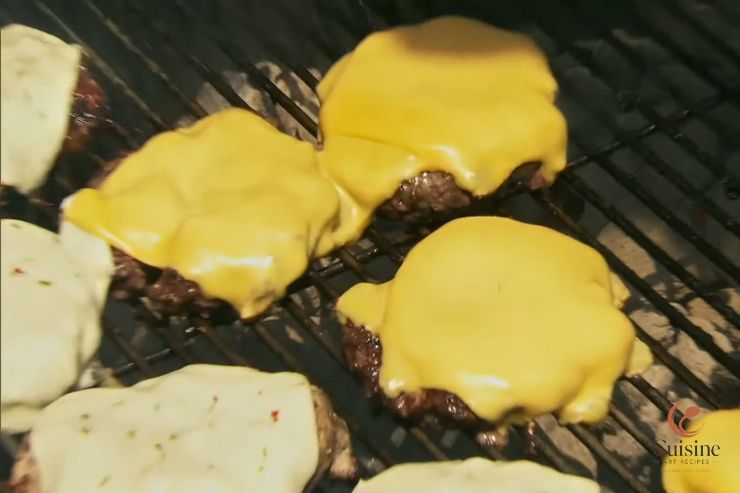
4. Flip Once and Add Cheese: I flip each patty a single time, top it with a slice of American cheese right away, and cover the pan loosely with a lid for about 20 seconds so the cheese melts into the meat instead of just sitting on it.
5. Check Temperature and Rest: I pull the patties at 130°F for medium-rare or 140°F for medium, since they’ll climb another few degrees off the heat. They rest on a plate for 3 minutes while I toast the buns in the same skillet.
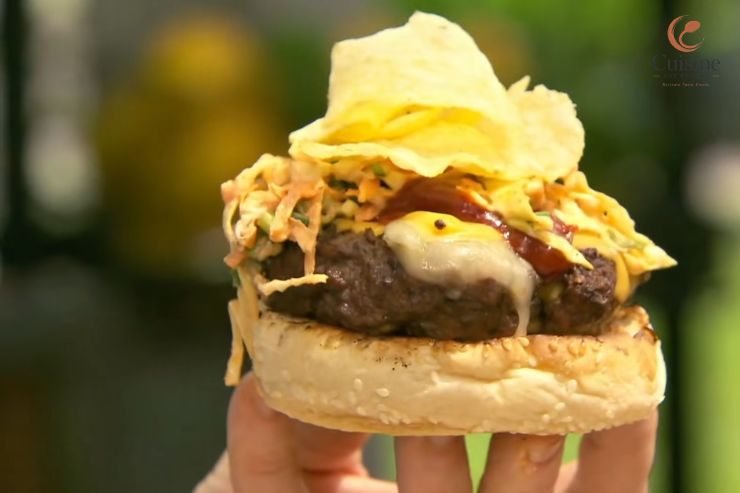
6. Build the Burger: Butter goes on the toasted buns first, then lettuce on the bottom to block the meat’s juice from soaking into the bread. The patty sits on top, followed by tomato, onion, and pickles, then the top bun goes on last.
How This Compares to the Original and Other Copycat Versions
This version follows the technique Bobby Flay has described in Food Network appearances and press interviews pretty closely. The main gap between this and his restaurant burgers at Bobby’s Burgers is scale and equipment. His restaurants run flat-top griddles built for volume, while a home skillet or grill gets close on flavor without matching that exact commercial setup.
Compared with a smash burger, this patty stays thicker and gets handled gently instead of pressed hard into the pan. A smash burger trades that thickness for wide, lacy, crispy edges from direct contact with very high heat, which changes the texture completely.
Compared with a typical steakhouse burger, which often blends in ingredients like Worcestershire, garlic, or a house steak seasoning, this stays deliberately bare. The beef and the crust carry the whole dish instead of a seasoning blend doing some of the work.
For readers chasing an original-style result close to what Flay actually teaches, this Burger stays truer to his method than a pressed smash burger or a heavily seasoned steakhouse patty.
Perfection Tips for This Perfect Burger
- Don’t overwork the meat: packing the beef too tight squeezes out fat before it hits the pan, leaving a denser, drier bite
- The thumbprint fixes shrinkage: without it, the center puffs into a dome and cooks unevenly, since the edges finish before the middle catches up
- Rest for 3 minutes: cutting in right off the heat lets the juice run onto the plate instead of staying in the meat
- Cast iron beats a thin grill pan: thin pans lose heat the moment the cold patty lands, so the crust never fully forms before the inside overcooks
- Stick with 80/20: leaner blends like 90/10 dry out fast at medium doneness, since there’s less fat left to keep the meat moist
- Season right before cooking: salting too early pulls moisture to the surface and can leave a slightly tougher texture when it sits more than 20 minutes
Bobby Flay Perfect Burger Variations to Try
Cheeseburger with a Steam-Melt: Cover the pan for the last 20 seconds after flipping so the cheese melts into the crust instead of resting on top. I serve this one on regular Tuesday nights since it needs no extra prep.
Bacon Burger: Add two slices of cooked bacon under the cheese for smoke and crunch against the soft bun. This is the version my father-in-law asks for at every cookout.
Stuffed Burger: Press a small cube of cheese into the center before sealing the patty shut, so it melts from the inside instead of just on top. Good for a weekend when you want something different.
Spicy Version: Mix a diced jalapeño into the meat and swap in pepper jack for the American cheese. Works well for a crowd that likes heat.
Mushroom Swiss: Sauté sliced mushrooms in butter and top the patty with Swiss instead of American.
Smash-Style for Contrast: Press the patty flat and thin onto a screaming hot pan for a crispy, lacy edge instead of the thicker, gently handled version above.
What Dishes to Try With This Burger
Classic fries and a simple green salad are the easiest sides, since neither competes with the beef for attention. A vinegar-forward slaw also works well when you want more crunch and acid on the plate.
For sauce, stick with the mayo, ketchup, and mustard already on the ingredient list, or mix a spoonful of each into a quick burger sauce with a little pickle brine.
A leftover cooked patty chops up well as a salad topper, or crumbles into a quick pasta sauce the next night.
On a Friday night here, it’s this burger with fries, cold slaw, and Juice for the kids, plates out on the porch steps until the bugs chase everyone back inside.
Storing, Freezing & Reusing
Raw shaped patties keep for up to 2 days in the fridge, stacked with a layer of parchment between them in a shallow container so they don’t stick together.
For freezing, wrap each raw patty individually in plastic, then store them together in a zip-top bag for up to 3 months. Thaw overnight in the fridge before cooking.
Cooked patties keep for about 4 days in a sealed container in the fridge.
Reheat gently in a skillet with a splash of water, covered, rather than a dry microwave, which tends to turn the outside rubbery while the center stays cold.
Bobby Flay Perfect Burger Recipe FAQs
1. Why did my burgers turn out dry?
Usually it’s a leaner blend than 80/20, overcooking past medium, or skipping the rest time after the pan. Any of those pulls moisture out of the patty before it reaches your plate.
2. Why do my burgers fall apart on the grill?
This usually happens when the meat is packed too loosely or flipped before a real crust forms. Let the first side sear fully before touching it with a spatula.
3. Why are my burgers sticking to the grates?
Cold grates or not enough oil are the usual causes. Heat the grate first and brush it with oil right before the patties go on, not after.
4. How do I stop flare-ups on a gas or charcoal grill?
Trim excess fat off the edges before cooking, and keep a cooler zone on the grill to move patties to when flames get too high.
5. Can I use ground turkey instead of beef?
Yes, Flay’s own recipe includes a turkey version at roughly 90/10, same size and technique as the beef patties. Expect a drier result, so watch the internal temperature and pull it as soon as it’s cooked through.
6. Can I make this gluten-free?
Swap in a gluten-free bun and double check your cheese and condiment labels, since the patty itself has no flour or filler to worry about.
7. Is this dairy-free friendly?
Skip the cheese and butter on the buns, and use olive oil in the pan instead. The beef and seasoning stay exactly the same either way.
Bobby Flay Perfect Burger Recipe
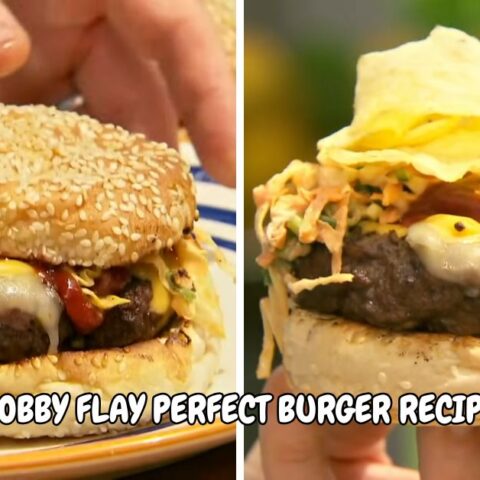
This Bobby Flay Perfect Burger Recipe uses just two seasonings and an 80/20 chuck blend for a juicy, crusty patty ready in under 30 minutes.
Ingredients
- 2 pounds ground chuck (80/20)
- 1 heaping tablespoon kosher salt
- 1 scant tablespoon freshly cracked black pepper
- 2 tablespoons canola oil
- 4 slices American cheese
- 4 potato hamburger buns
- 2 tablespoons unsalted butter
- 4 leaves Bibb lettuce
- 1 large beefsteak tomato
- ½ small red onion
- 8 dill pickle chips
- Mayonnaise, ketchup, and mustard
Instructions
- I split two pounds of ground chuck into four six-ounce portions and season both sides heavily with kosher salt and cracked pepper. Loose handling matters here, so I only work the meat enough to form a ball, then press a shallow well into the center with my thumb.
- The dent should stay about a half inch deep. When the meat springs right back to flat, it’s been packed too tight and needs a lighter touch next time.
- I set a cast-iron skillet over medium-high heat for a full 4 minutes before adding the canola oil. A pan that isn’t hot enough is the main reason burgers steam instead of sear, so I wait for a faint shimmer over the surface before the patties go in.
- I lay the patties in the pan without crowding them and leave them alone for about 4 minutes. Moving them early tears the crust that’s forming, so my hands stay off the spatula until that side is deeply browned.
- A good crust releases from the pan on its own. When a patty sticks and tears on the first try, give it another 45 seconds before checking again.
- I flip each patty a single time, top it with a slice of American cheese right away, and cover the pan loosely with a lid for about 20 seconds so the cheese melts into the meat instead of just sitting on it.
- I pull the patties at 130°F for medium-rare or 140°F for medium, since they’ll climb another few degrees off the heat. They rest on a plate for 3 minutes while I toast the buns in the same skillet.
- Butter goes on the toasted buns first, then lettuce on the bottom to block the meat’s juice from soaking into the bread. The patty sits on top, followed by tomato, onion, and pickles, then the top bun goes on last.
Notes
Internal temperature climbs 3 to 5 degrees during the rest, so pull the patties slightly before your target doneness.
Nutrition Information:
Yield: 4 Serving Size: 1Amount Per Serving: Calories: 520
Two seasonings and one thumbprint trick are doing more work here than a long ingredient list ever could. That’s the real lesson behind this Bobby Flay Perfect Burger Recipe: good beef, real heat, and a light hand beat a crowded spice rack every time.
Cast iron and a hot grill both get you there, so use whichever one is already out on your counter or fired up in the yard.