Pastrami sat on my someday list for years because the process looked like it needed a full weekend and a real plan. That changed the winter. I started studying Guy Fieri‘s approach to big, hands-on dishes and decided to try the Guy Fieri Primetime Pastrami Recipe in my own kitchen.
My first run taught me more about what not to do than what to do. I trimmed the fat cap too aggressively and rushed the cure by two days, so the color never fully set. Notes went into a spiral notebook I keep by the stove, and I tried again the next weekend with more patience.
By the third attempt, in early March, I had the timing figured out well enough to plan a batch around a Saturday visit from my brother-in-law’s family. Watching them build sandwiches from a platter I had cured myself told me the method finally worked.
This is the pastrami project I return to on cold weekends. Here’s the Recipe that worked best for me.
What Is Guy Fieri’s Primetime Pastrami?
Guy Fieri Primetime Pastrami starts with a whole beef brisket instead of a pre-corned deli cut. This allows for a rich flavor to develop from the beginning.
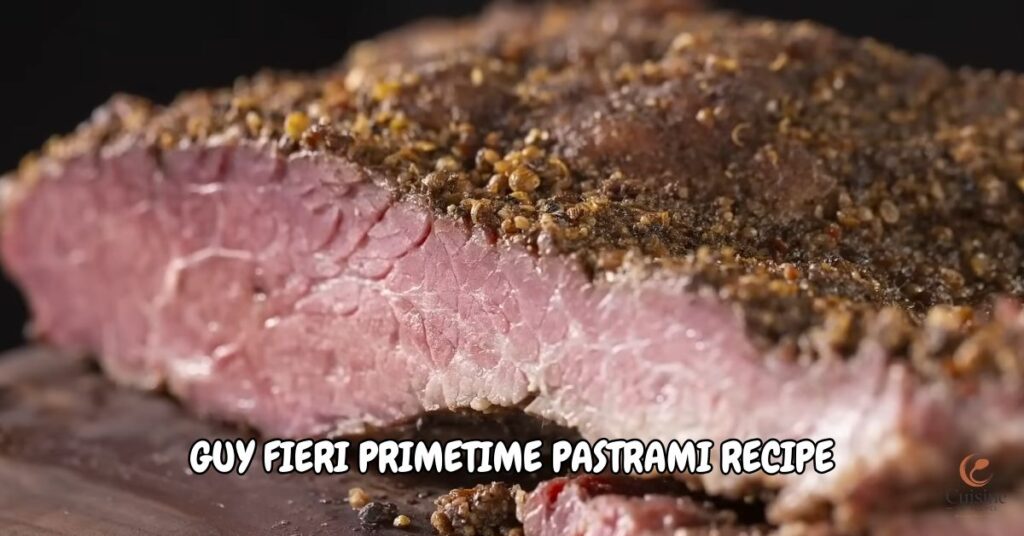
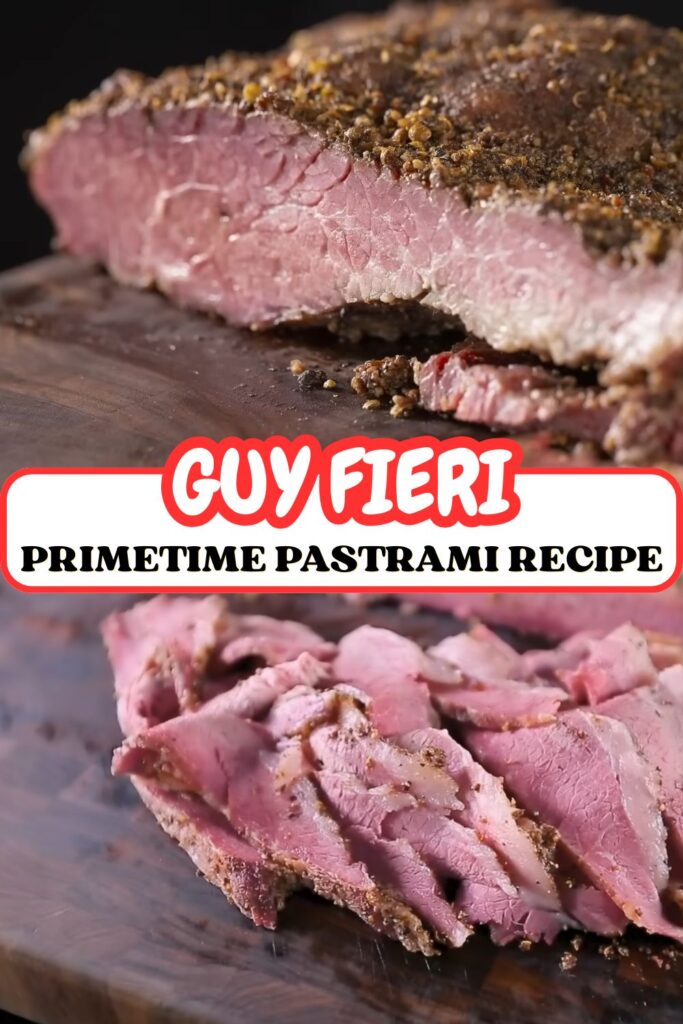
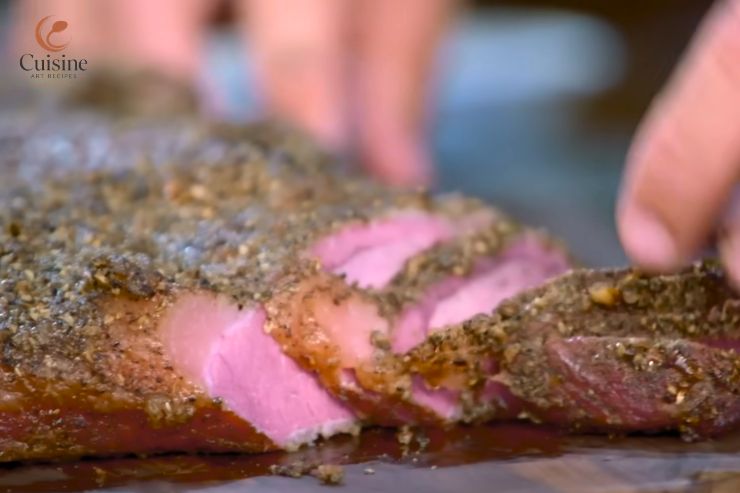
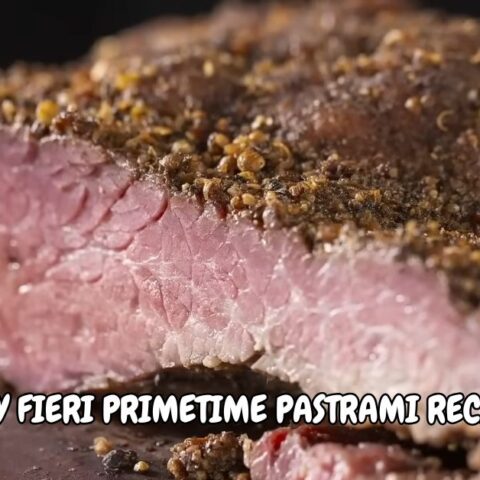
The long soak transforms the brisket into something similar to corned beef, creating the pink ring that shows when it is sliced.
What makes this pastrami different from regular deli pastrami is an extra layer. After curing, a thick rub of cracked pepper, coriander, and more juniper is pressed onto the meat. Then, it is smoked slowly instead of steamed quickly.
Curing gives the color, the rub forms the crust, and smoking creates the texture.
Why I Love Making This Pastrami From Scratch
The payoff for the multi-day process is a crust so peppery it snaps a little between your teeth, built from cracked pepper and coriander toasted in a dry pan before grinding.
Real smoke, hickory or a cherry-hickory blend, pushes into the meat over 8 or 9 hours at 222°F, giving the fat a soft, custardy texture that boiling a corned beef never produces.
Every slice pulls apart with a fork yet holds together for a sandwich, thanks to the long cure breaking down muscle fiber before the meat hits heat.
Homemade batches beat what a lot of delis sell, since you control the salt and pepper instead of guessing at someone else’s ratio. One batch covers sandwiches, a platter, and extra to freeze.
Guy Fieri Primetime Pastrami vs. Traditional Deli Pastrami
Homemade versions of corned beef are often better than what many delis offer because you can manage the salt and pepper to your taste. One batch can make enough for sandwiches, a platter, and some extra to freeze.
Every slice is tender enough to pull apart with a fork, yet it stays together for sandwiches. This is because the long curing process breaks down the muscle fibers before cooking the meat.
Using hickory or a cherry-hickory blend adds real smoke flavor to the meat over 8 to 9 hours at 222°F. This method makes the fat soft and creamy, unlike boiling corned beef.
The result of this multi-day process is a crust that is peppery and slightly crunchy, made from cracked pepper and coriander that are toasted in a dry pan before grinding.
Ingredients for Guy Fieri Primetime Pastrami Recipe
1 whole packer brisket (about 12 pounds, trimmed to roughly 10): The canvas for the cure and smoke; the fat cap bastes the meat internally as it cooks. Creekstone Farms is my go-to brand when the butcher can order it.
1 gallon water: The brine base, and it must be cold before the brisket goes in, since warm liquid speeds bacterial growth.
1 cup Diamond Crystal kosher salt: What actually cures the meat, pulling moisture out and letting the brine’s flavor move in. It’s less dense than Morton’s, so swapping brands unadjusted pushes a brine too salty.
¾ cup packed brown sugar: Balances the salt and helps the surface caramelize into the bark’s dark color.
4 level teaspoons pink curing salt #1: Turns the brisket pink and protects the meat through a long smoke in a way plain salt cannot. I weigh this on a scale, ever since an eyeballed batch left a metallic aftertaste.
2 cinnamon sticks: Background warmth that rounds out the pepper and clove, fading by the time the brine finishes steeping.
2 tablespoons mustard seed: A mild sharpness that carries into the bark, best from a mix of yellow and brown seed.
3 whole star anise pods: A faint licorice note most people can’t quite name in the finished pastrami.
8 whole cloves: A sharp, slightly sweet note against the black pepper; doubling this by accident tastes like mulling spice.
2 tablespoons juniper berries, cracked: The ingredient most home cooks skip, and the one giving this pastrami its most distinct flavor, a faint pine and citrus note.
6 dried bay leaves: A background herbal note keeping the brine from tasting one-note.
1 teaspoon red chili flakes: Background warmth rather than real heat.
¼ cup coarse black peppercorns, cracked (for the rub): The backbone of the crust; coarse cracking rather than pre-ground is the difference between a crust that snaps and one that tastes dusty.
3 tablespoons coriander seeds, cracked (for the rub): A citrusy lift balancing the pepper and juniper.
2 tablespoons granulated garlic: Dissolves into the rub more evenly than fresh minced garlic and won’t scorch during a long smoke. Badia is the jar I keep stocked for this.
Equipment You’ll Need
- Digital kitchen scale: weighs curing salt exactly
- Large stockpot: heats and steeps brine
- Food-safe bucket or hotel pan: holds brisket submerged
- Sharp boning knife: trims fat cleanly
- Spice grinder or mortar: cracks whole spices
- Wire rack over a sheet pan: air-dries cured surface
- Offset, pellet, or electric smoker: cooks low and slow
- Instant-read meat thermometer: checks internal temperature
- Butcher paper: wraps brisket through the stall
- Long slicing knife: cuts thin against grain
How I Make Guy Fieri-Style Pastrami at Home
Make the Brine: Boil a gallon of water. Stir in kosher salt, brown sugar, and pink curing salt until they dissolve. Add cinnamon sticks, mustard seeds, star anise, cloves, cracked juniper, bay leaves, and chili flakes. Remove the pot from heat and let it steep for about 35 minutes until it smells great.
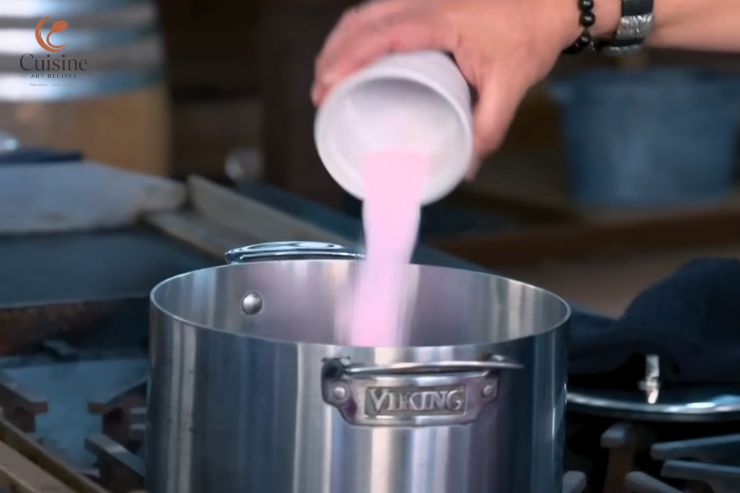
Cool the Brine: Instead of letting the brine cool on the counter, add several trays of ice. Count the melted ice as part of your gallon. The brine must be completely cold before you add the brisket, as warm brine on room-temperature meat can cause bacteria.
Trim the Brisket: Place the brisket fat-side up. Trim the fat cap to about a quarter inch and remove the heavy fat vein between the point and flat. Too much fat will block the brine from reaching the meat, so trim generously.
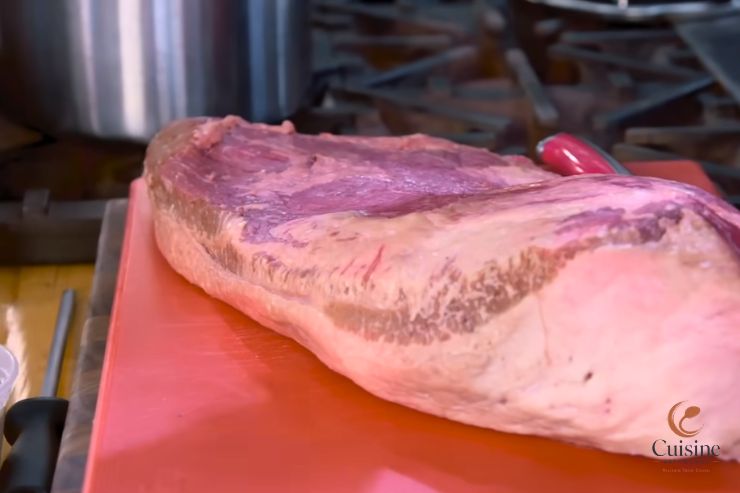
Submerge and Cure: Put the trimmed brisket into a food-safe bucket and pour the cold brine over it until it’s fully covered. Use a plate to keep it submerged. Refrigerate for 6 to 9 days. The surface should turn a deep rose color, not gray-brown, which shows the cure has penetrated.
Rinse and Dry: Remove the brisket, rinse the spices off under cool water, and pat it dry. Place it on a wire rack and let it sit uncovered in the fridge until it feels tacky instead of wet. This helps the dry rub stick later.
Mix and Apply the Rub: Combine cracked black pepper, coriander, extra juniper, brown sugar, granulated garlic, and remaining salt. Press this mixture onto all surfaces of the brisket by hand. Some rub will fall off when you flip it—keep pressing on more until it’s fully coated.
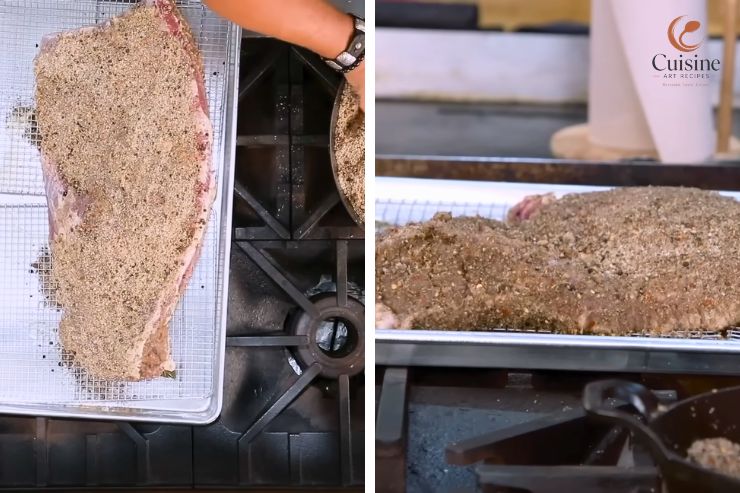
Rest the Rub, Then Smoke: Let the rubbed brisket sit uncovered on a rack in the fridge for up to a day to set the crust. Prepare the smoker with hickory or a hickory and cherry blend. Smoke at 220°F to 225°F for 8 to 9 hours until the bark is deep mahogany and a thermometer reads about 203°F with little resistance in the thickest part.
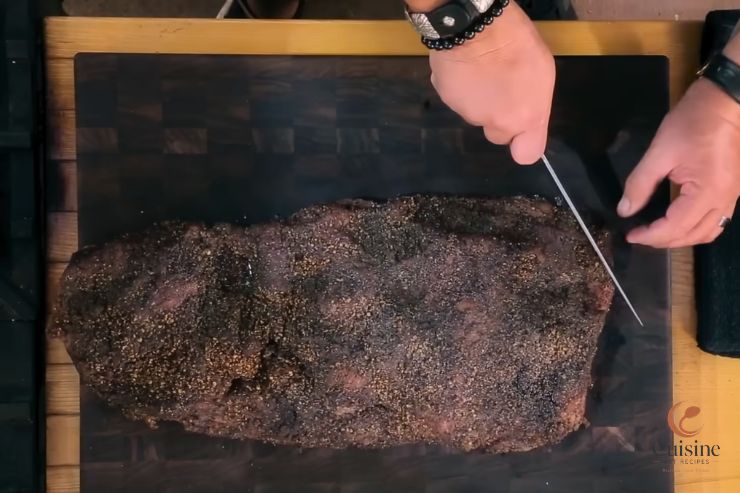
Rest and Slice: Wrap the finished brisket in butcher paper and let it rest for at least 45 minutes before slicing. Slicing too early lets the juices run out instead of staying in the meat. Cut against the grain into thin slices, turning the brisket a quarter turn partway through, as the grain direction shifts between the point and flat.
Common Pastrami Problems and How I Fix Them
Too Salty: The brine likely sat past 9 days, or salt was measured by volume, not weight. Soak sliced pastrami in cold water for 20 minutes to pull some back out.
Tough or Dry: Comes from pulling at 203°F without checking probe tenderness, or trimming the fat cap too thin. Give it 30 more minutes and check again with a probe.
Bark Too Hard: The smoker likely ran hotter than 230°F, or the rub was ground too fine. Wrap in butcher paper for the last hour to soften it.
Weak Smoke Ring: A thin ring means the surface was still wet when smoke started, not a doneness problem.
Still Tough at 210°F: Temperature alone doesn’t guarantee tenderness. Cook by probe feel, then rest longer before slicing.
Expert Tips for the Best Guy Fieri Primetime Pastrami
Weigh the Curing Salt: A scale removes guesswork a spoon can’t, and this is the one ingredient worth being exact about.
Keep the Brine Cold: Brine above 40°F for too long risks spoilage before the cure sets.
Don’t Rush the Cure: Pulling it on day 4 instead of day 6 or later leaves the center pale.
Dry the Surface First: A tacky, not wet, surface lets the rub stay put through hours of smoke.
Watch the Smoker, Not the Clock: A steady 220°F to 225°F matters more than an exact hour count.
Slice Thin, Against the Grain: Thick slices chew tough even on a perfectly cooked brisket.
6 Variations You Should Try
Oven-Finished Version: Skip the smoker and finish in a 225°F oven, adding a few drops of liquid smoke to the rub. No real bark forms, but it delivers tender, sliceable pastrami without tending a fire.
Pellet Smoker Version: A pellet grill holds temperature more evenly than a stick burner, making the cook nearly hands-off, though smoke flavor comes through milder.
Hickory and Cherry Blend: Straight hickory can turn bitter over a long cook, so cutting it with cherry mellows the smoke, best for pastrami eaten within a couple of days.
Extra-Tender Finish: Pull the brisket only once a probe slides in with zero resistance, even past 205°F, since tenderness comes from connective tissue breaking down, not a thermometer number.
Corned Beef Shortcut: A store-bought corned beef point skips the brine entirely, leaving just rinse, dry, rub, and smoke. Expect a saltier result than the from-scratch version.
Guy Fieri Pastrami Sandwich: Pile warm, thin-sliced pastrami about three-quarters of an inch high onto rye with deli mustard, then close it up simple.
The Best Mustards and Toppings for Homemade Pastrami
Yellow mustard is a classic choice. It is sharp and simple, and it doesn’t clash with the pepper and juniper in the crust. Deli-style brown mustard, the coarse and grainy kind, adds more tang and pairs well with rye bread.
Cold, crunchy pickles cut through the richness of the fat, and a garlic dill pickle on the side is more helpful than you might think.
For a Reuben sandwich, use sauerkraut, a slice of Swiss cheese, and Thousand Island dressing. Grill the sandwich until the cheese melts and the bread is golden. You can also try horseradish cream spread thin on the top slice of bread.
For a complete spread, set out a platter with thinly sliced pastrami, a few mustards in small bowls, pickles, and rye bread on the side. Let people build their own sandwiches, just like I do at my table.
What to Serve With Smoked Pastrami
A potato salad with a strong mustard flavor pairs well with rich meats. It’s better to use a mustard and vinegar dressing instead of heavy mayonnaise.
Coleslaw works similarly by providing acidity and crunch that cuts through the richness. Pickles should also be on the plate, not just in the sandwich, as they offer a cold and sharp contrast between bites of warm meat.
French fries or kettle-style potato chips are great with heavier meals, while a simple green salad with a sharp vinaigrette is better for lighter ones. Slightly warmed sauerkraut can serve as both a side and a topping for sandwiches.
To make your meals balanced, choose side dishes that contrast with the main dish. For example, if you’re serving a rich and salty meat, pick something cold, crunchy, or acidic to go with it. Last Saturday, I served potato salad, half-sour pickles, kettle chips, and Papaya Juice.
How I Store and Reheat Leftover Pastrami
Store sliced or whole pastrami in an airtight container or wrapped tightly in butcher paper and plastic. It will stay good for 5 to 7 days in the fridge. Keeping it whole rather than sliced helps it stay moist longer, as more exposed surface can dry out faster.
For longer storage, wrap portions of about a pound each in plastic, then in foil, and then place them in a freezer bag. They will keep for up to 3 months in the freezer.
Portioning before freezing means you only need to thaw what you need for one meal. To reheat without drying it out, steam sliced pastrami over simmering water for about 4 minutes, covered.
This method works better than microwaving or using direct heat. For sandwiches, a quick steam before building keeps the slices soft without cooking them further.
Avoid reheating a large chunk in the oven uncovered, as the surface will dry out before the center warms up.
Guy Fieri Primetime Pastrami Recipe FAQs
1. Can I use just the flat part of the brisket instead of a whole packer brisket?
Yes, the flat cures and smokes well on its own, but you’ll miss the fattier point that many people like for sandwiches. You can expect to cook it for about 6 hours instead of 8 or 9.
2. Is pink curing salt necessary, and is it safe?
Yes, it’s necessary for color and adds protection during a multi-day cure in the refrigerator. When used in the right amount, it’s the same salt found in many commercial cured meats.
3. Can I skip the day of resting the rub before smoking?
You can go straight to the smoker after applying the rub, but letting it rest in the fridge for several hours helps the crust set better.
4. Can I cure two briskets using the same brine?
Yes, as long as both briskets stay fully submerged, which often means you need to double the brine instead of stretching one gallon over two cuts.
5. I don’t own a smoker. Can I still use this recipe?
Yes, you can finish the cured and rubbed brisket in an oven at 225°F, but it won’t have the real smoke flavor. You can add a little liquid smoke to the rub to get closer to that flavor.
6. How spicy does this pastrami come out?
It’s not very spicy. The chili flakes add a mild warmth, and most of the perceived spice comes from black pepper.
7. Can I use a charcoal grill set up for indirect heat instead of a smoker?
Yes, if you arrange the coals to one side and add wood chunks for smoke, it works well. Just make sure it stays at 220°F to 225°F. A separate grill thermometer is helpful because built-in lid gauges can often be wrong.
8. Why did my bark turn out pale instead of dark?
This usually happens if the smoker was too cool, the surface wasn’t dry enough before applying the rub, or the cooking time was too short. A good smoked crust should be close to mahogany, not tan.
9. Can I mix the brine and spices ahead of time?
Yes, you can make the brine a day or two in advance and keep it cold. This actually helps the spices soak in better. Just make sure it’s fully cold again before adding the brisket.
10. Does the brisket need to be fully thawed before curing?
Yes, a partially frozen brisket won’t cure evenly because brine can’t penetrate ice as it does with chilled meat. Thaw it completely in the fridge, which usually takes 2 to 3 days.
Guy Fieri Primetime Pastrami Recipe
Make Guy Fieri Primetime Pastrami Recipe at home with cured brisket, bold spices, and slow smoking for tender meat and a peppery bark.
Ingredients
- 1 whole packer brisket (about 12 pounds, trimmed to roughly 10 pounds)
- 1 gallon water
- 1 cup Diamond Crystal kosher salt
- ¾ cup packed brown sugar
- 4 teaspoons pink curing salt #1
- 2 cinnamon sticks
- 2 tablespoons mustard seeds
- 3 whole star anise pods
- 8 whole cloves
- 2 tablespoons juniper berries, cracked
- 6 dried bay leaves
- 1 teaspoon red chili flakes
- ¼ cup coarse black peppercorns, cracked
- 3 tablespoons coriander seeds, cracked
- 2 tablespoons granulated garlic
Instructions
- Boil a gallon of water. Stir in kosher salt, brown sugar, and pink curing salt until they dissolve. Add cinnamon sticks, mustard seeds, star anise, cloves, cracked juniper, bay leaves, and chili flakes. Remove the pot from heat and let it steep for about 35 minutes until it smells great.
- Instead of letting the brine cool on the counter, add several trays of ice. Count the melted ice as part of your gallon. The brine must be completely cold before you add the brisket, as warm brine on room-temperature meat can cause bacteria.
- Place the brisket fat-side up. Trim the fat cap to about a quarter inch and remove the heavy fat vein between the point and flat. Too much fat will block the brine from reaching the meat, so trim generously.
- Put the trimmed brisket into a food-safe bucket and pour the cold brine over it until it’s fully covered. Use a plate to keep it submerged. Refrigerate for 6 to 9 days. The surface should turn a deep rose color, not gray-brown, which shows the cure has penetrated.
- Remove the brisket, rinse the spices off under cool water, and pat it dry. Place it on a wire rack and let it sit uncovered in the fridge until it feels tacky instead of wet. This helps the dry rub stick later.
- Combine cracked black pepper, coriander, extra juniper, brown sugar, granulated garlic, and remaining salt. Press this mixture onto all surfaces of the brisket by hand. Some rub will fall off when you flip it—keep pressing on more until it’s fully coated.
- Let the rubbed brisket sit uncovered on a rack in the fridge for up to a day to set the crust. Prepare the smoker with hickory or a hickory and cherry blend. Smoke at 220°F to 225°F for 8 to 9 hours until the bark is deep mahogany and a thermometer reads about 203°F with little resistance in the thickest part.
- Wrap the finished brisket in butcher paper and let it rest for at least 45 minutes before slicing. Slicing too early lets the juices run out instead of staying in the meat. Cut against the grain into thin slices, turning the brisket a quarter turn partway through, as the grain direction shifts between the point and flat.
Nutrition Information:
Yield: 12 Serving Size: 1Amount Per Serving: Calories: 500
Beginners can definitely succeed with this, but it requires more patience than skill. The key steps are to weigh the curing salt instead of guessing, keep the brine cold the whole time, and use a thermometer to check the internal temperature instead of estimating.
Most first attempts fail because they skip the resting stages after curing or smoking. Expect to spend a full week on the curing process, a day for the rub to set, and about 9 hours for active smoking. So, this project is better for two weekends than just one afternoon.