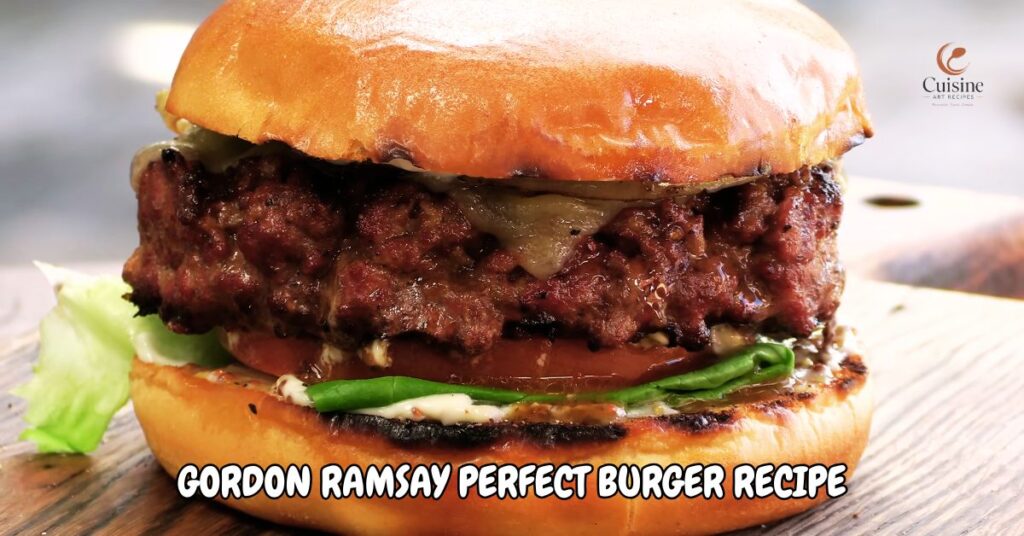

My dad requested Gordon Ramsay Beef Wellington Recipe the week he turned 65. He had spent the entire fall watching reruns of Hell’s Kitchen, so I decided to make his birthday extra special with a dish inspired by his favorite show.
I purchased a $74 cut of beef from the butcher on Fulton Street and cleared the entire kitchen counter to get started. The recipe I followed was inspired by the Beef Wellington served at Gordon Ramsay Hell’s Kitchen at Caesars Palace in Las Vegas.
Ramsay’s version features a tightly wrapped, golden-brown pastry crust, setting it apart from some traditional preparations. This homemade Beef Recipe is my take on that iconic Hell’s Kitchen favorite.
The process begins with a hot sear and a snug pastry wrap, followed by two chilling periods before the final bake.

Why Beef Wellington Pastry Turns Soggy and How to Prevent It
Most online recipes for Beef Wellington fail for the same reasons. Cooks rush the chilling process, estimate doneness incorrectly, or skip the crucial step of removing excess moisture from the filling. As a result, the pastry becomes soggy, and the pink center of the beef turns gray.
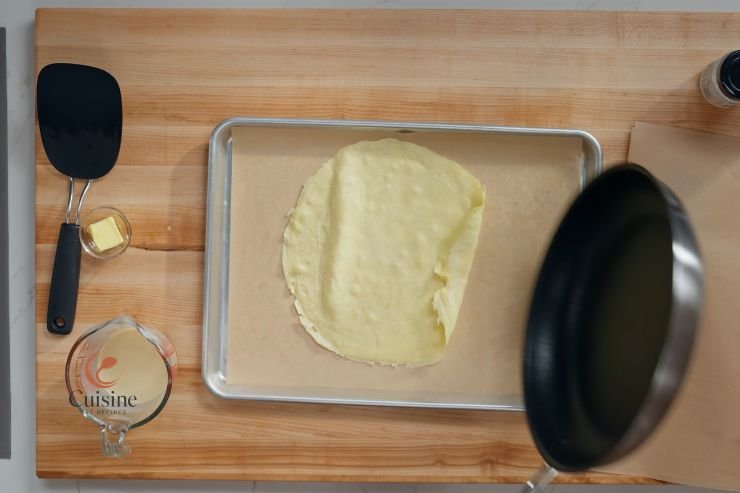
Traditional French-inspired recipes often include a thin, savory crêpe wrapped around the beef. This layer helps absorb excess moisture without adding extra salt. It also makes the dish more forgiving during preparation.
Unlike slippery fillings, a crêpe is easier to handle and wrap, making it a good choice for beginners, especially those working with an unevenly shaped roast.
For guests who prefer their beef less pink, the end slices are a better option because they are typically cooked closer to medium doneness. Overall, Beef Wellington is particularly well suited to adults who enjoy tender, pink-centered beef.
Ingredients for Gordon Ramsay Beef Wellington
1 pound 10 ounces (740 g) center-cut beef tenderloin: A center cut forms an even cylinder, so slices cook alike. I reached for Creekstone Farms. Ask for a piece no wider than 3 inches.
1 tablespoon plus 1 teaspoon olive oil: A mild olive oil handles the sear without smoking the kitchen out. California Olive Ranch is my pick. Save any peppery finishing oil for salad, since high heat flattens its aroma.
¾ teaspoon kosher salt: Most goes on the beef, and the rest pulls water from the mushrooms as they cook. I use Diamond Crystal. Morton’s is denser, so use a scant ½ teaspoon in its place.
¾ teaspoon freshly ground black pepper: Fresh grinds keep their oils, so a little goes far. Most land on the beef, with a dust over the bresaola. I grind Tellicherry peppercorns in a Peugeot mill.
1 ½ tablespoons English mustard: Brushed on hot, it adds a thin, sharp layer the filling lacks. I use Colman’s. Prepared horseradish works in its place and gives a sharper, sinus-tickling bite.
1 pound 9 ounces (700 g) chestnut mushrooms: Mature cremini carry a deeper, earthier note than white buttons. I bought Giorgio boxes. Wipe caps with a damp towel instead of rinsing, since waterlogged caps add minutes to the dry pan.
1 large garlic clove: One clove seasons the filling without turning bitter once it browns. I buy Christopher Ranch heads. Pick firm bulbs with tight, papery skin.
3.5 ounces (100 g) cooked, peeled chestnuts: Their starch and low oil let them soften into the filling. Roland vacuum packs are my choice. Skip them and stir in 2 tablespoons toasted panko, which drinks up moisture but adds no sweetness.
5 thyme sprigs: Strip the leaves to get about 1 teaspoon. Thyme’s woody oils survive the long dry cook better than soft herbs. Dried thyme works at ⅓ teaspoons.
8 thin slices bresaola (about 4 ounces / 115 g): Overlapped slices form a salty jacket that catches juice. Ask the deli counter for large, thin cuts, since packaged slices tear. I buy it sliced to order and read the label for beef only.
14 ounces (397 g) all-butter puff pastry: Butter layers turn to steam and lift the dough into flakes. Dufour from Whole Foods is my brand. Shortening-based sheets brown paler and taste flat.
2 large egg yolks plus 1 teaspoon cold water: Yolk alone gives a deep amber shine. Whole egg browns are lighter. The water loosens it so the brush glides without dragging the dough.
½ teaspoon flaky sea salt: The flakes stick to the wet glaze and set a crisp, crackly top. Maldon is my choice. Salt the pastry only, since the bresaola already seasons the beef.
Required Kitchen Equipment
- 12-inch skillet: for the sear
- Food processor: pulses mushrooms evenly
- Large nonstick pan: dries the duxelles
- Plastic wrap: shapes a tight log
- Rimmed sheet pan: preheats in the oven
- Parchment paper: easy transfer to the pan
- Pastry brush: even glaze coverage
- Instant-read thermometer: probe through the pastry
- Sharp carving knife: clean 1-inch slices
How to Make Gordon Ramsay Beef Wellington Recipe
1. Sear the Beef: Pat the tenderloin dry and season it with ½ teaspoon salt and ¼ teaspoon pepper. Heat the oil in the skillet until it shimmers. Sear each side for 45 seconds. Sear the ends for 20 seconds. The crust should look deep brown while the center stays cold.

2. Brush on the Mustard: Move the beef to a plate. Brush the mustard on in a thin coat while the meat is still hot. Let it cool for 15 minutes. Heat from the beef pulls the mustard into the crust, so do not wait.

3. Dry the Duxelles: Pulse the mushrooms with the garlic and ¼ teaspoon salt until they look like coarse sand. Break the chestnuts in by hand and add the thyme. Cook in a dry nonstick pan over medium-high heat for 16 minutes.
Water pours out first, then burns off. The paste is ready when a spatula drags a clean trail. When it still looks wet at 16 minutes, keep cooking in 2-minute bursts. Cool it on a plate for 20 minutes.
4. Build the Bresaola Layer: Lay a 20-inch sheet of plastic wrap on the counter. Overlap the bresaola slices into a 9 by 12-inch rectangle, then dust with pepper. Spread the cooled duxelles thin, leaving a half-inch border at each end.
5. Roll It Tight: Set the beef on the duxelles at the edge nearest you. Lift the plastic and roll the bresaola and fill around the beef. Twist both ends like a candy wrapper and squeeze until the log feels firm. Chill for 30 minutes.
Put the empty sheet pan in the oven now and heat to 400°F (200°C). A loose wrap leaves gaps that fill with juice, so re-roll it tighter.
6. Wrap in Pastry: Roll the pastry to about 11 by 15 inches. Unwrap the beef log, set it near one edge, and roll the pastry around it. Trim the excess, leaving a 1-inch overlap, and press the seam and ends shut. Wrap it in fresh plastic, twist the ends tight, and chill for 10 minutes. Then remove the plastic.
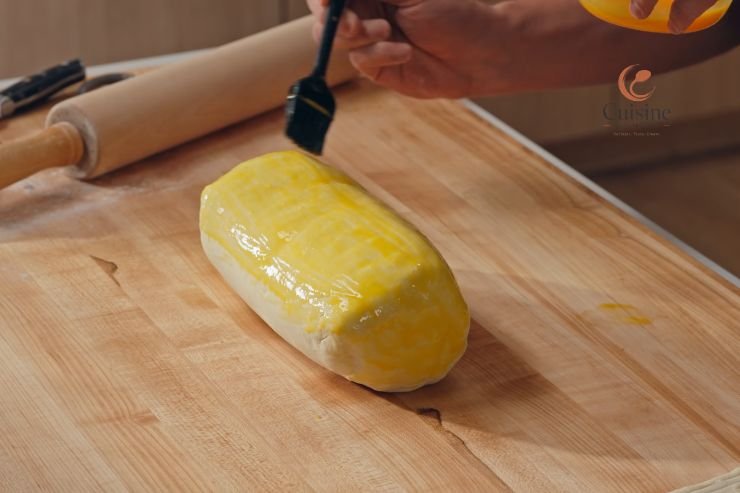
7. Glaze and Score: Set the log seam-side down on parchment. Brush on the yolk mixture, then drag the back of a knife in shallow diagonal lines. Sprinkle on the flaky salt.
8. Bake and Check: Slide the parchment onto the hot sheet pan. Bake for 34 minutes, then probe the thickest point through the pastry. Pull it at 118°F (48°C). The crust should look deep amber. When the pastry browns before the beef hits 118°F, tent loose foil over the top and keep baking.
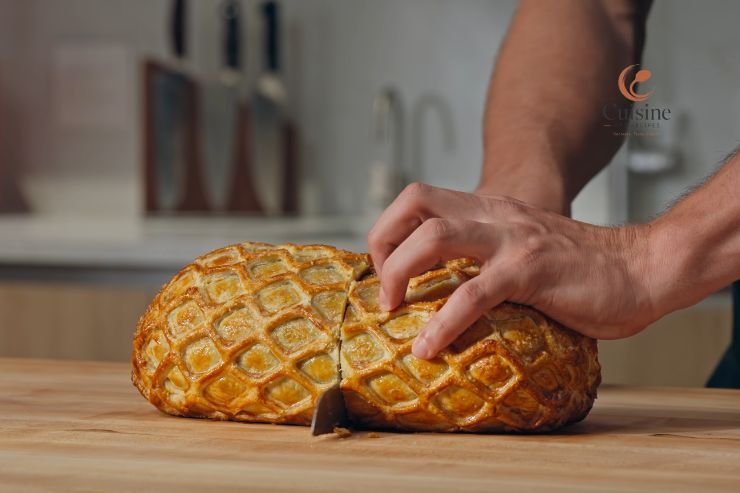
9. Rest and Slice: Move the Wellington to a wire rack for 12 minutes. The center climbs to about 127°F (53°C) as it rests. Cut 1-inch rounds with a sharp knife, using a gentle sawing motion. The crust should crackle under light pressure, and only a little juice should pool on the board.
Chef Special Tips for Beef Wellington
1. Pastry Cracks at the Corners: Warm dough tears when bent. Chill the rolled sheet for 10 minutes before wrapping.
2. Ends Burst Open: Fold the pastry ends under, and glue each flap down with a dab of yolk.
3. Balloon Under the Glaze: Trapped steam lifts the top. Poke 3 small vents with a skewer before brushing.
4. Pale Crust at 118°F: Move the pan to the upper third of the oven for the last 4 minutes.
5. Thin Tail Overcooks: Fold the narrow end under and tie it with kitchen twine before searing.
6. Smeared Slices: Wipe the blade clean between cuts.
How I Customize This Beef Wellington
Horseradish Heat: Replace the mustard with 1 ½ tablespoons of prepared horseradish. The beef picks up a sharper, sinus-clearing bite.
Wild Mushroom Mix: Swap 7 ounces (200 g) of the chestnut mushrooms for shiitake caps. Shiitake adds a meatier chew and a smoky edge. My brother gets this one whenever he visits.
Liver Pâté Layer: Spread 2 tablespoons of smooth chicken liver pâté over the bresaola before the duxelles. It adds a buttery base.
Panko Insurance: Stir 2 tablespoons of toasted panko into the cooled duxelles. It drinks up leftover moisture, which helps on humid August days.
Sage and Lemon: Replace the thyme with 6 chopped sage leaves and add ½ teaspoon lemon zest. The zest brightens the earthy mushrooms. I pair it with glazed carrots.
What I Serve With Beef Wellington
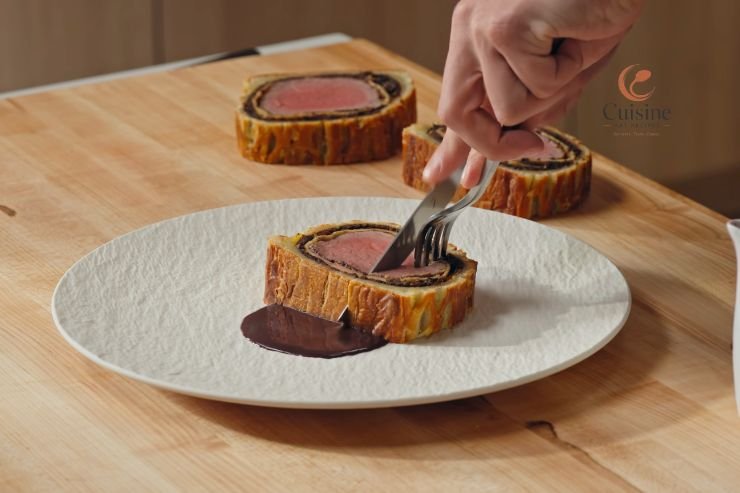
A glossy red wine sauce is the perfect starting point. Two tablespoons per plate are enough, as the pastry is already rich. The sauce should simply add a touch of acidity to balance the richness.
Honey-glazed carrots and parsnips bring a delicious caramelized sweetness, a technique worth borrowing from Ramsay. Both can roast on the lower rack while the Wellington bakes. Buttery mashed potatoes are ideal for soaking up the sauce, while roasted potatoes are another excellent option if there is enough room in the oven.
To complete the plate, add something green for balance. Steamed green beans tossed with lemon zest and a teaspoon of butter help cut through the richness of the pastry.
Alternatively, a watercress salad offers the same contrast, with its peppery leaves and a splash of lemon juice providing a refreshing finish.
How I Store Beef Wellington
Leftover slices keep for 3 days in the fridge. Wrap them in foil, then set them in an airtight container so the pastry does not pick up fridge odors.
Reheat on a wire rack set over a sheet pan at 350°F (175°C) for 10 to 12 minutes. The rack lets hot air reach the underside, so the pastry crisps again. A microwave steams the crust soft.
Thin end slices heat faster, so pull them at 8 minutes. The thick center slices need the full 12. Cool fresh slices on a rack for 20 minutes before packing, since trapped steam softens the crust.
Slices also freeze for 1 month in a zip bag with the air pressed out. Thaw them overnight in the fridge before reheating. The USDA advises reheating leftovers to 165°F (74°C), which cooks the beef through. Cold slices on a salad avoid that.
Turning Leftover Beef Wellington Into Something New
Cold slices work best within 2 days of baking. Both ideas below turn them into a fresh meal.
Wellington hash: Dice cold slices, pastry included, and fry with 2 cups of cubed potatoes for 12 minutes. The pastry crisps in the skillet and thickens the potatoes. Top with a fried egg.
Wellington sandwich: Shave cold slices thin and pile them on a toasted baguette. Stir 1 teaspoon of horseradish into 2 tablespoons of sour cream for the spread. The tang of the spread cuts the richness of the cold beef. It takes about 5 minutes.
Beef Wellington Recipe FAQs
1. Can I use a cheaper cut than tenderloin?
Not for this recipe. Tenderloin stays tender at 127°F and has an even shape. Leaner cuts like top round turn chewy at that doneness and bake unevenly. Ask the butcher for the center-cut piece, not the tail.
2. Can I assemble Wellington a day ahead?
Yes. Finish the pastry wrap, keep the log in plastic, and chill it for up to 24 hours. Glaze and bake straight from the fridge, and start probing at 36 minutes.
3. How much beef do I need per person?
Plan on 4 ounces (115 g) of beef per guest. The 740 g piece serves six. Hearty eaters need a 1 pound 14 ounce (850 g) piece, baked 3 minutes longer.
4. Is English mustard too spicy for beef?
No. The thin coat sits under the bresaola, and baking mellows its heat. Guests notice a faint warmth at the edge of each slice, and the spice fades by the third bite.
5. How do I probe without wrecking the pastry?
Insert the probe through the short end, aimed at the center of the log. The hole lands in the end slice, which goes to the guest who wants medium. Wipe the probe before checking again.
6. Why did my pastry shrink away from the beef?
Dough stretched too tight when wrapped springs back in the heat. Roll it gently, keep a 1-inch overlap, and chill the wrapped log so the layers relax.
7. Do I really need to sear the beef first?
Yes. Pastry insulates the beef, so it never browns in the oven. The 45-second sear builds a browned crust that baking cannot.
8. Can I use pre-packed bresaola?
Yes, but read the label for beef only and check that the slices lie flat. Packaged slices run thick and fold over, so overlap 10 slices instead of 8 and trim ragged edges.
Gordon Ramsay Beef Wellington Recipe
Gordon Ramsay Beef Wellington Recipe with bresaola and dry-pan mushrooms for a crisp, never-soggy crust. Ready in 2 hours 40 minutes.
Ingredients
- 1 pound 10 ounces (740 g) center-cut beef tenderloin
- 1 tablespoon plus 1 teaspoon olive oil
- ¾ teaspoon kosher salt
- ¾ teaspoon freshly ground black pepper
- 1 ½ tablespoons English mustard
- 1 pound 9 ounces (700 g) chestnut mushrooms
- 1 large garlic clove
- 3.5 ounces (100 g) cooked, peeled chestnuts
- 5 thyme sprigs
- 8 thin slices bresaola
- 14 ounces (397 g) all-butter puff pastry
- 2 large egg yolks plus 1 teaspoon cold water
- ½ teaspoon flaky sea salt
Instructions
- Pat the tenderloin dry and season it with ½ teaspoon salt and ¼ teaspoon pepper. Heat the oil in the skillet until it shimmers. Sear each side for 45 seconds. Sear the ends for 20 seconds. The crust should look deep brown while the center stays cold.
- Move the beef to a plate. Brush the mustard on in a thin coat while the meat is still hot. Let it cool for 15 minutes. Heat from the beef pulls the mustard into the crust, so do not wait.
- Pulse the mushrooms with the garlic and ¼ teaspoon salt until they look like coarse sand. Break the chestnuts in by hand and add the thyme. Cook in a dry nonstick pan over medium-high heat for 16 minutes.
- Water pours out first, then burns off. The paste is ready when a spatula drags a clean trail. When it still looks wet at 16 minutes, keep cooking in 2-minute bursts. Cool it on a plate for 20 minutes.
- Lay a 20-inch sheet of plastic wrap on the counter. Overlap the bresaola slices into a 9 by 12-inch rectangle, then dust with pepper. Spread the cooled duxelles thin, leaving a half-inch border at each end.
- Set the beef on the duxelles at the edge nearest you. Lift the plastic and roll the bresaola and fill around the beef. Twist both ends like a candy wrapper and squeeze until the log feels firm. Chill for 30 minutes.
- Put the empty sheet pan in the oven now and heat to 400°F (200°C). A loose wrap leaves gaps that fill with juice, so re-roll it tighter.
- Roll the pastry to about 11 by 15 inches. Unwrap the beef log, set it near one edge, and roll the pastry around it. Trim the excess, leaving a 1-inch overlap, and press the seam and ends shut. Wrap it in fresh plastic, twist the ends tight, and chill for 10 minutes. Then remove the plastic.
- Set the log seam-side down on parchment. Brush on the yolk mixture, then drag the back of a knife in shallow diagonal lines. Sprinkle on the flaky salt.
- Slide the parchment onto the hot sheet pan. Bake for 34 minutes, then probe the thickest point through the pastry. Pull it at 118°F (48°C). The crust should look deep amber. When the pastry browns before the beef hits 118°F, tent loose foil over the top and keep baking.
- Move the Wellington to a wire rack for 12 minutes. The center climbs to about 127°F (53°C) as it rests. Cut 1-inch rounds with a sharp knife, using a gentle sawing motion. The crust should crackle under light pressure, and only a little juice should pool on the board.
Notes
Pull the Wellington at 118°F (48°C) and let carryover heat finish it near 127°F (53°C). Keep every layer cold and dry before baking.
Nutrition Information:
Yield: 6 Serving Size: 1Amount Per Serving: Calories: 690
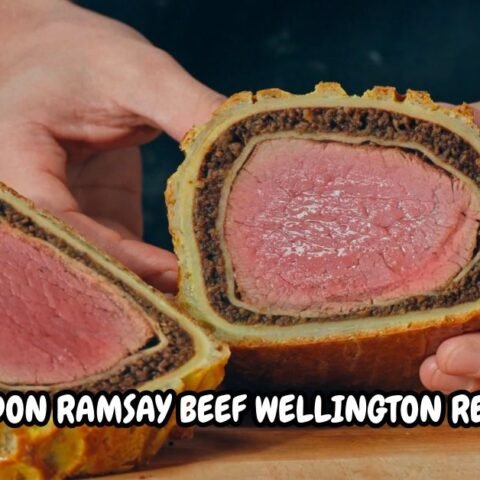
The first cut tells the story. The crust crackles beneath the knife. A ring of bresaola frames the beef, with a thin line of mustard along the edge. The pink center extends from edge to edge, with no gray band.
Dad takes the first slice, then asks for the end piece. He says nothing for a full minute, which, coming from him, counts as a glowing review.